
Boost Kids Memory Focus How Puzzles Enhance Critical Skills
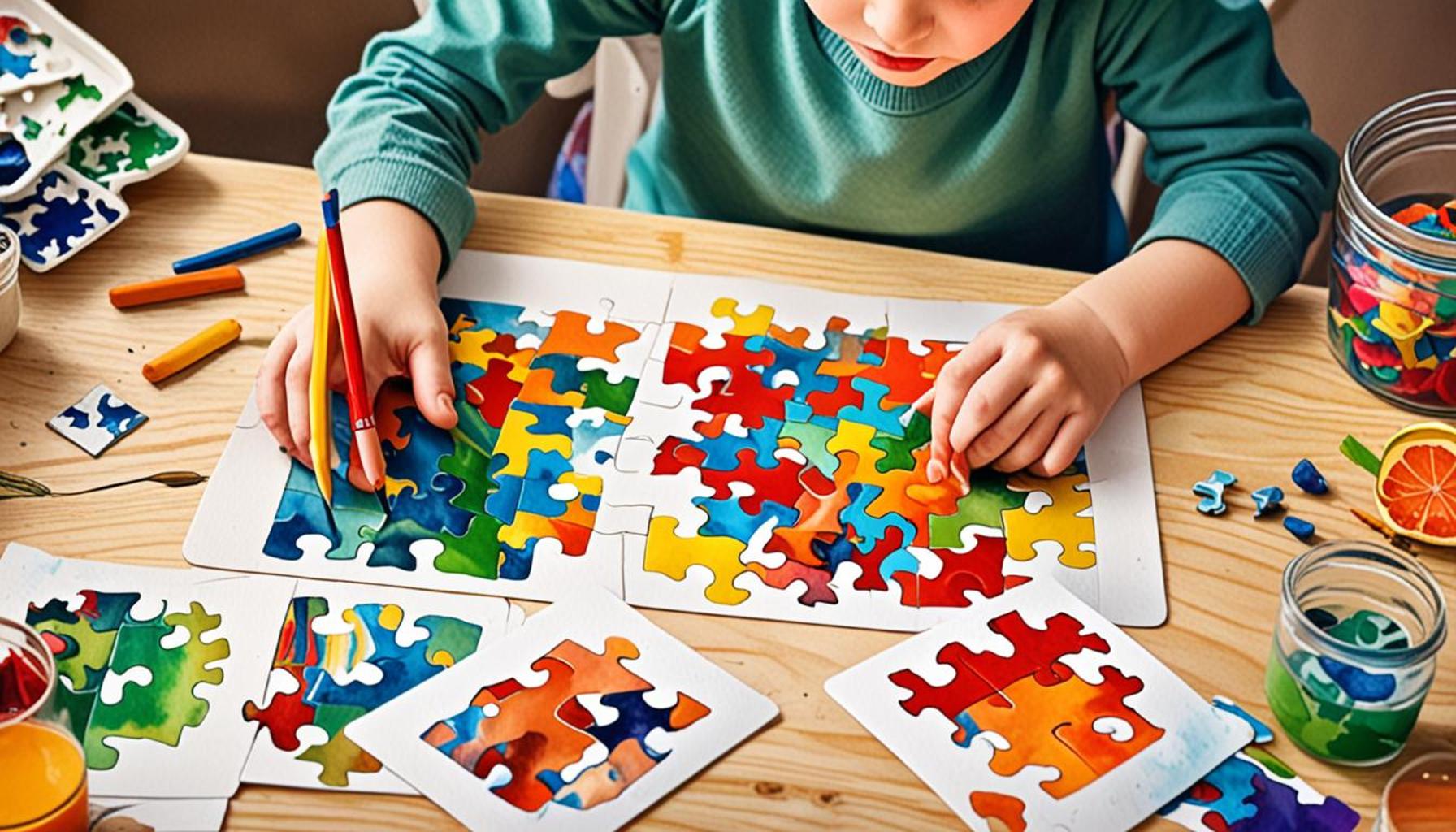
Unlocking Potential Through Play
In an age where digital distractions are rampant, fostering memory and concentration in children has become more crucial than ever. Engaging in mind games and puzzles offers a unique opportunity to develop these essential skills. Research shows that puzzles not only stimulate cognitive development but also enhance critical thinking abilities, making them a potent tool in modern education.
The Relevance of Puzzles
Puzzles serve as more than just entertainment; they are vital resources for growth in young minds. Their benefits include:
- Improved problem-solving skills—Children learn to navigate challenges creatively.
- Boosted memory retention—Regular engagement can enhance the brain’s capacity to store information.
- Increased focus—Working through puzzles teaches children to concentrate on tasks without getting distracted.
As we delve deeper into the world of puzzles, we’ll explore the Top 5 puzzles that can significantly uplift children’s cognitive abilities. Get ready to discover how playful challenges can lay the groundwork for brighter futures!
DIVE DEEPER: Click here to enhance your focus
Top 5: Developing Critical Skills – How Puzzles Can Enhance Memory and Concentration in Children
Puzzles are not just entertaining activities for children; they are powerful tools for stimulating cognitive development and enhancing memory and concentration skills. In this article, we will explore how engaging with various types of puzzles can significantly benefit young minds. Here’s our countdown of the top five ways puzzles contribute to critical skill development in children.

5. Promoting Problem-Solving Skills
Puzzles naturally encourage children to think critically and creatively. As they work through a puzzle, they encounter a variety of challenges that require them to employ different strategies for resolution. This problem-solving theme is pivotal in nurturing a child’s critical thinking abilities.
When faced with obstacles in puzzles, children learn to:
- Evaluate possible solutions
- Experiment with different approaches
- Recognize patterns and apply them to solve issues
For instance, consider a child assembling a jigsaw puzzle. They must decide whether to start with the edges or focus on a prominent image within the puzzle. Such decisions stimulate brain processes associated with analytical thinking and strategy development. Additionally, this empowers children not just in puzzle-solving but also in handling real-life scenarios, like deciding the best method for tackling a homework problem or resolving conflicts with peers.
4. Enhancing Memory Retention
Engaging with puzzles requires children to remember various shapes, colors, and patterns to successfully complete them. This process involves both short-term and long-term memory usage, thereby significantly enhancing their ability to retain information. Studies have shown that memory exercises, such as puzzles, encourage the brain to form new connections, strengthening memory pathways.
Some aspects of memory enhancement through puzzles include:
- Improved recall of information and sequences
- Retention of visual and spatial information
- Strengthened ability to follow multistep instructions
This cognitive benefit is evident in the way children remember and replicate the strategies that worked, applying them in future puzzles or academic tasks. Educational puzzles tailored for subjects like math or languages further reinforce this memory improvement, aiding in academic subjects. The mental exercise of recalling and linking information in puzzles also fosters a toolbox of memory skills they can utilize in various learning contexts throughout their education.
3. Boosting Concentration and Focus
Completing a puzzle requires sustained attention, which is crucial for enhancing concentration. As children focus on fitting pieces together or solving a riddle, they are practicing how to maintain their attention over periods of time. This is especially beneficial in a world full of distractions.
The act of concentrating on puzzles helps children develop:
- The ability to ignore distractions
- Patience as they work through challenges
- Determination to see a task through to completion
In today’s digital age, where numerous distractions like social media and television vie for a child’s attention, developing the skill to focus on a single task is invaluable. Educational experts suggest that this form of deep focus cultivates mindfulness, a mental state that can improve academic performance. For example, children adept at concentrating on a complex puzzle might find it easier to focus on school assignments or classroom activities.
2. Strengthening Logical Thinking
Puzzles often challenge children to think logically, connecting pieces and clues based on rational reasoning. This form of analytical thinking is foundational for successful problem solving, mathematic skills, and even scientific understanding.
Logical reasoning skills developed through puzzles include:
- Understanding cause-and-effect relationships
- Making deductions based on available evidence
- Organizing information systematically
Puzzles such as Sudoku, logic games, or pattern recognition challenges cultivate a child’s ability to perceive sequences and understand the underlying rules that govern systems. For instance, when solving Sudoku, children need to logically deduce the placement of numbers in grids, an exercise that mimics problem-solving methodologies in mathematics and science inquiries. Such exercises sharpen their capacity to devise algorithms or methods for larger, more complex issues they may face later in life.
1. Fostering Emotional Resilience and Confidence
At the top of our list is the emotional growth children experience while working on puzzles. Solving challenges provides a sense of achievement that boosts self-esteem. When children complete a puzzle, they experience a rush of satisfaction and confidence that encourages them to tackle even more complex tasks.
Moreover, dealing with frustrations that come with challenging puzzles teaches children resilience. They learn that failure is a part of the process and that persistence leads to success. This emotional resilience is critical for overall well-being.
Through these experiences, puzzles help children develop:
- The ability to handle setbacks gracefully
- A sense of independence in problem-solving
- Heightened motivation to take on challenges
When a child fits that final piece in a puzzle, the satisfaction they feel is not just about completing the task—it’s about overcoming obstacles. This triumph can serve as a microcosm for other personal challenges children might face. The emotional dynamics of success and failure in puzzle-solving prepare children to face real-world challenges with confidence and composure, fostering lifelong resilience.
In conclusion, the benefits of engaging in puzzle-solving activities extend beyond fun and entertainment. They serve as vital building blocks in developing critical skills such as memory, concentration, logical thinking, and emotional resilience—skills that lay the groundwork for lifelong learning and personal growth. Encouraging children to embrace puzzles is not only an investment in their cognitive capability but also an enhancement of their capacity to thrive in an ever-evolving world.
| Category | Key Features |
|---|---|
| Cognitive Development | Puzzles promote critical thinking, problem-solving skills, and logical reasoning. Engaging in puzzle activities encourages children to analyze and break down complex problems into manageable parts. |
| Memory Enhancement | Solving puzzles requires recalling shapes, colors, and configurations. This mental exercise significantly enhances working memory as children must manipulate and hold information in their minds while completing a task. |
| Focus and Concentration | Puzzles demand sustained attention to detail. Children learn to maintain focus over an extended period, enhancing their ability to concentrate on other tasks as well. |
| Emotional Resilience | Through the challenges posed by puzzles, children practice perseverance. Completing a difficult puzzle boosts their confidence and fosters a sense of achievement, which is critical in their developmental years. |
Puzzles are not only an entertaining pastime but also a powerful tool in developing essential skills that lay the foundation for academic and personal success. By engaging in activities like solving jigsaw puzzles or brain teasers, children constructively channel their energy into honing their cognitive abilities, creating pathways for enhanced memory and concentration. Moreover, when children tackle a challenging puzzle, they learn to **adapt** and **strategize**. This process of trial and error is instrumental in developing **patience** and **strategic thinking**. For instance, when they try to fit pieces together, they begin to mentally map out various strategies to figure out the next steps to take, fostering a deep understanding of spatial relationships and enhancing their ability to think ahead.The importance of fostering these skills early cannot be overstated. As children grow, their ability to concentrate and retain information becomes increasingly crucial, especially in today’s fast-paced, information-rich environments. Engaging in puzzles cultivates a solid foundation for their future educational endeavors, making them not only learners but **active problem-solvers** capable of tackling challenges they may face in various aspects of life. Additionally, studies have shown that repetitive engagement with puzzles can lead to improvements in overall academic performance, particularly in subjects that require significant analytical skills, such as mathematics and science. As children learn that their efforts in solving puzzles directly correlate with their success, they build a lifelong love for learning that transcends beyond mere engagement into **self-directed exploration** and inquiry.
DIVE DEEPER: Click here to enhance your mind
Frequently Asked Questions About Puzzles and Child Development
How do puzzles enhance a child’s memory?
Puzzles can significantly improve a child’s memory by requiring them to recall and recognize various shapes, colors, and patterns. As they repeatedly handle pieces, children enhance their ability to retain information. Engaging with puzzles demands the use of memory to visualize puzzle pieces and anticipate the completion of the task. This process strengthens both short-term and long-term memory capabilities.
In what ways do puzzles boost concentration skills in children?
Puzzles require focused attention to detail and prolonged concentration over time. The more complex the puzzle, the more it challenges a child to concentrate deeply on solving it. Completing a puzzle rewards the child, which reinforces their ability to focus and complete tasks. This enhanced attention span translates into better performance in academic settings and other activities that require sustained mental effort.
Are all types of puzzles beneficial for developing critical skills in children?
While most puzzles can aid in developing critical skills, certain types are particularly effective. Jigsaw puzzles, logic puzzles, and 3D puzzles are excellent for developing spatial perception and problem-solving skills. Word puzzles like crosswords and anagrams can boost language and cognitive skills. Choosing puzzles that align with a child’s age and developmental stage ensures the activities remain challenging yet accessible, thereby maximizing their developmental benefits.
At what age should children begin using puzzles to aid their development?
Children can start engaging with simple puzzles at a young age, often as early as 18 months. Beginning with easy, large-piece puzzles can help toddlers improve hand-eye coordination and grasp the basic concept of fitting pieces together. As children grow older, increasing the difficulty and complexity of puzzles aligns with their cognitive development, enhancing skills such as critical thinking, strategy planning, and enhanced memory.
What role do parental involvement and guidance play in puzzle activities?
Parental involvement can be crucial in maximizing the educational benefits of puzzles. Adults can model problem-solving behaviors, offer hints without giving direct answers, and create an encouraging environment. By demonstrating that it is acceptable to attempt multiple strategies, parents can teach persistence and adaptive thinking alongside the mechanical skills involved. This guidance helps children to develop perseverance and emotional resilience, both of which are key components of successful learning experiences.
DISCOVER MORE: Click here to enhance your mind
Conclusion
In today’s fast-paced world, fostering critical skills in children is becoming increasingly essential. As our exploration into the realm of puzzles has shown, these simple yet effective tools hold the potential to significantly improve children’s memory and concentration. By engaging in activities that challenge their minds, children not only enhance their attention span but also build a robust foundation for future learning. The ability of puzzles to captivate and stimulate young minds makes them a valuable asset in educational development.
The article has highlighted several key aspects of how puzzles serve as a bridge to cognitive enhancement. Puzzles promote logical thinking, requiring children to anticipate outcomes and devise strategies, which in turn nurtures problem-solving skills. Additionally, they help children improve their spatial awareness and understand the concept of sequencing, vital skills that are transferrable to numerous educational and real-life scenarios.
- Memory improvement through puzzle-solving as children recall shapes, patterns, and strategies previously employed.
- Development of enhanced concentration by focusing on completing intricate tasks.
- Promotion of critical thinking as children learn to analyze and solve complex problems.
As such, incorporating puzzles into children’s daily activities could serve as a stepping stone to more structured learning environments, helping them to thrive academically and socially. It becomes evident that puzzles are not mere toys but foundational tools that cultivate essential cognitive abilities. Embracing this approach might just unlock a new dimension of learning, prompting educators and parents to further explore the multitude of benefits puzzles can offer. Ultimately, fostering such skills early on can offer a significant advantage, paving the way for lifelong success and adaptability in a rapidly evolving world.