Unlocking Problem-Solving Skills The Role of Puzzles in Development
In today’s fast-paced world, the ability to solve problems quickly and effectively is invaluable. Engaging with mind games and puzzles provides a unique opportunity to sharpen this skill while having fun. As various forms of puzzles challenge our cognitive abilities, they become essential tools for mental development.
Research shows that solving puzzles can lead to improved critical thinking, enhanced creativity, and even greater emotional resilience. Here are key points to consider:
- Cognitive Benefits: Puzzles stimulate the brain and can enhance memory retention.
- Social Interaction: Cooperative problem-solving encourages teamwork and communication skills.
- Stress Relief: Engaging with puzzles can serve as a productive outlet for stress.
In this article, we will explore the top 5 puzzles that effectively develop problem-solving skills, providing insights into how each type can contribute to your mental agility. Prepare to discover which puzzles could become your new favorite tools for personal growth!
DISCOVER MORE: Click here to dive deeper
Top 5: Unraveling the Code – The Role of Puzzles in Developing Problem-Solving Skills
In a world increasingly driven by complex challenges, the importance of developing strong problem-solving skills cannot be overstated. Interestingly, puzzles and enigmas serve as not just entertainment but also as powerful tools for enhancing these skills. Here, we present our top five insights into how engaging with puzzles can significantly boost your problem-solving abilities.

5. The Cognitive Benefits of Puzzles
Puzzles are more than just solitary activities; they are mental workouts that challenge the brain on multiple levels. Whether you’re working through a crossword puzzle, Sudoku, or even complex logic games, each interaction involves engaging distinct areas of the brain. A 2019 study in the journal Frontiers in Aging Neuroscience found that older adults who engaged in puzzle-solving activities exhibited better cognitive function and attention span than those who did not.
Research indicates that solving puzzles can improve concentration, enhance memory, and promote overall cognitive function. Specifically, puzzles are thought to create new connections between brain cells, improving mental speed and thought processes. For example, memory-focused puzzles like crosswords boost vocabulary and linguistic skills, while numerical puzzles like Sudoku increase one’s ability to spot patterns and develop logical reasoning.
Key Cognitive Advantages:
- Improves memory retention – Solving puzzles requires recalling and applying prior knowledge, which enhances memory.
- Enhances attention span – The concentration needed to solve complex puzzles trains the mind to maintain focus for longer periods.
- Develops logical reasoning skills – Breaking down a puzzle into manageable parts fosters logical and strategic thinking.
In today’s fast-paced, information-driven society, maintaining these mental faculties is crucial, making the cognitive benefits of puzzles worthy of attention.
4. Puzzles as Social Connectors
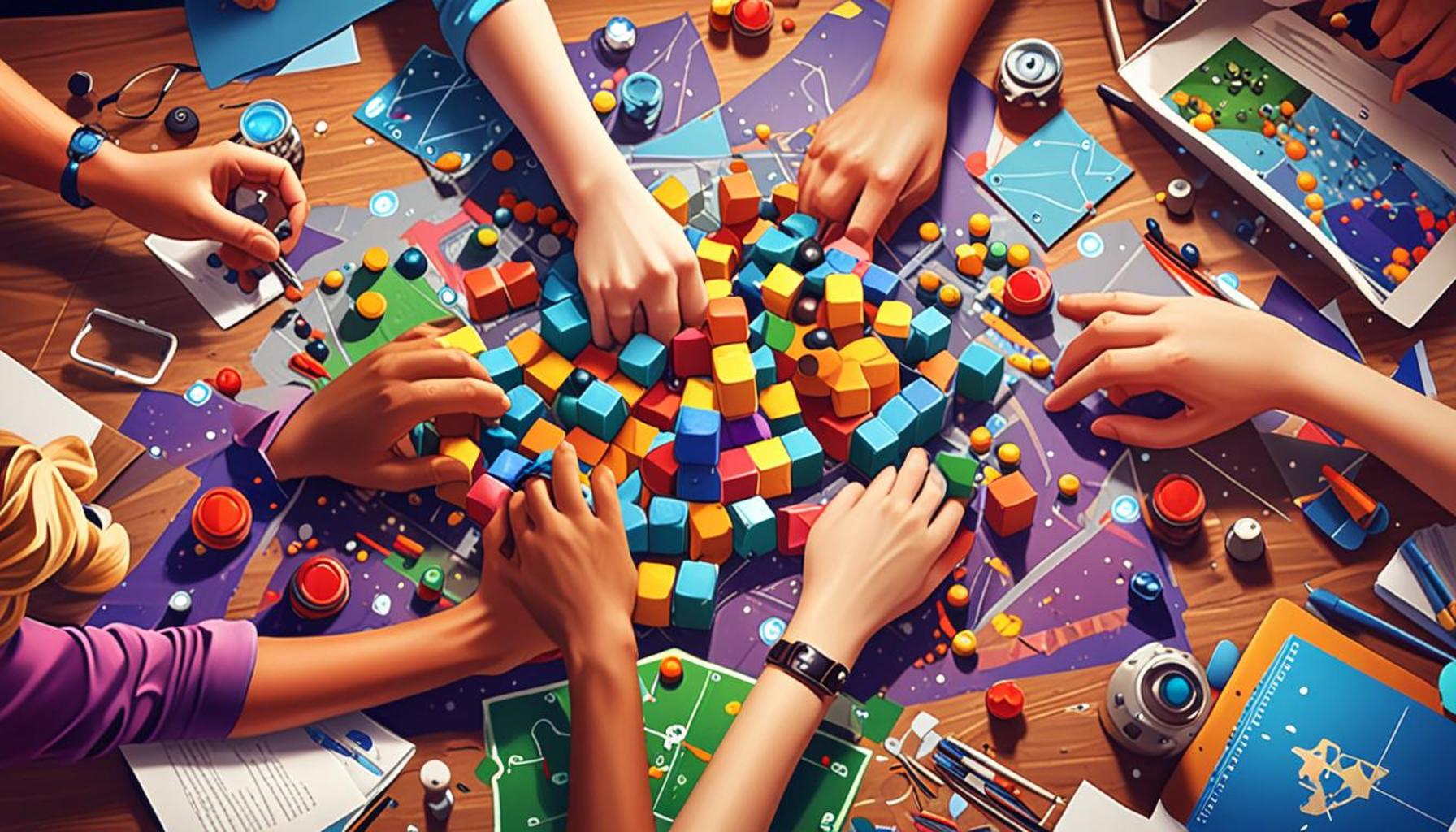
While often perceived as solitary activities, puzzles can also be significant social connectors. When people come together to solve puzzles, whether in group-based activities like escape rooms or social events like trivia nights, they engage in a collaborative problem-solving exercise. This interaction can strengthen teamwork and effective communication skills, making individuals more adept at working with diverse teams.
The social aspect of puzzles introduces participants to different perspectives and problem-solving approaches, highlighting that there is often more than one path to a solution. For example, a team solving an escape room has to combine various insights and skill sets to accomplish a common goal, effectively demonstrating the richness that diverse approaches bring to problem-solving.
Important Social Skills Developed:
- Team collaboration – Participants learn to leverage each other’s strengths to achieve a synergistic solution.
- Effective communication – Clear articulation of ideas and strategies is necessary for collective success.
- Adaptability to diverse methodologies – Exposure to different ways of thinking enables flexible problem-solving.
Thus, the social dynamics of puzzle-solving not only foster a collaborative spirit but also strengthen an individual’s overall problem-solving toolkit.
3. Building Resilience Through Challenges
Puzzles challenge the mind and often introduce an element of struggle and frustration, making them an excellent platform for building resilience. The process of tackling difficult puzzles teaches individuals to handle setbacks gracefully and instills a tenacious belief in persisting toward an answer.
Taking on a demanding puzzle requires patience and the understanding that initial failures are stepping stones to success. This process mirrors the resilience required in real-life situations, where perseverance in the face of adversity often leads to breakthroughs.
Benefits of Building Resilience:
- Improves coping strategies for frustration – Learning to overcome obstacles in puzzles can translate to better handling of setbacks in life.
- Encourages a growth mindset – Each completed puzzle reinforces the idea that abilities can be developed through dedication and hard work.
- Fosters a determination to overcome obstacles – The satisfaction of solving a difficult puzzle reinforces the value of persistence.
Succeeding through the challenges presented by puzzles imbues an individual with the resilience necessary to tackle more significant issues effectively.
2. Enhancing Creative Thinking Skills
Puzzles encourage people to see problems from new and unconventional perspectives, significantly enhancing creative thinking. When faced with puzzling situations, individuals must often think outside the box, leading them to develop innovative solutions.
For instance, solving a jigsaw puzzle requires one to visualize spatial relations and to trial various potential solutions before arriving at the final image. This kind of exercise fosters the ability to connect seemingly unrelated concepts, enhancing the capacity for creative problem-solving. Moreover, working with riddles demands the solver identify and interpret clues, which promotes flexible thinking and the ability to view issues from multiple angles.
Creative Thinking Improvements:
- Stimulates innovative thought processes – New and creative solutions emerge from exploring unusual puzzle scenarios.
- Encourages the exploration of multiple solutions – Puzzles often have more than one answer, motivating the development of diverse strategies.
- Fosters the ability to synthesize diverse ideas – Combining different thoughts and ideas leads to groundbreaking insights.
Through this lens, puzzles serve as a springboard for innovation, illustrating the vital connection between creativity and effective problem-solving.
1. The Ultimate Problem-Solving Playground
At the top of this hierarchy is the understanding that puzzles are the ultimate playground for problem-solving skills. By presenting a variety of challenges that tap into logical reasoning, creativity, resilience, and collaboration, puzzles provide a comprehensive training platform for cognitive development. They allow individuals to translate theoretical knowledge into practical skills, offering a highly engaging means of personal development.
With puzzles, there’s an immediate feedback loop that allows solvers to refine strategies in real-time. This continuous development cycle keeps the activity fresh and educational, instilling a lifelong love for learning and exploration, which is critical in today’s ever-evolving world.
Why Puzzles Reign Supreme:
- They require multi-faceted cognitive engagement – Engaging simultaneous use of different mental faculties enriches learning experiences.
- They provide immediate feedback on problem-solving approaches – Quickly adapting to feedback enhances learning efficiency.
- They encourage a lifelong love for learning and exploration – The diversity within puzzles stokes an ongoing desire for cognitive growth.
Concluding our exploration, it becomes clear that the role of puzzles in developing problem-solving skills is deeply embedded in their practical application. By engaging with puzzles regularly, individuals can unlock new levels of understanding in their cognitive processes, paving the way for enhanced problem-solving proficiency and personal growth.
| Category | Advantages |
|---|---|
| Critical Thinking | Engaging with puzzles enhances analytical skills, prompting individuals to evaluate different solutions and approaches. |
| Creativity | Challenges stimulate innovative thought by requiring participants to think outside the box, leading to unique problem-solving strategies. |
| Collaboration | Working on puzzles often involves teamwork, which fosters communication and interpersonal skills necessary for collective problem-solving. |
| Stress Management | Solving enigmas can serve as a valuable practice in stress relief, enabling individuals to maintain composure and focus when faced with challenges. |
The exploration of enigmas serves as more than just a mental exercise; it plays a pivotal role in developing essential life skills. Engaging in puzzles effectively promotes critical thinking as individuals are encouraged to dissect problems into manageable parts, analyze data, and synthesize viable solutions. This skill is not only valued in academic settings but is equally crucial in personal and professional realms. Additionally, the creative aspect of solving enigmas cannot be overlooked. As participants grapple with intricate challenges, they are driven to approach problems creatively. This experience enhances their capacity to innovate and breaks down conventional thought barriers, allowing for the emergence of unconventional solutions that may not have been considered otherwise.Moreover, the social dimension of puzzles is significant. Often, these challenges are tackled in groups, promoting collaboration. This cooperative effort fosters important communication skills as participants articulate their reasoning and strategies while also learning to integrate diverse perspectives into a cohesive solution. Lastly, engaging with complex problems can be a therapeutic process. As individuals learn to navigate frustrations that arise during problem-solving, they cultivate stress management skills that are transferable to various life situations. This makes puzzles not only a tool for cognitive development but also an effective method for enhancing emotional resilience. Delving into the world of enigmas can provide a rich and interactive pathway toward honing these invaluable problem-solving skills, underlining the profound impact they have on both individual growth and collective dynamics.
DISCOVER MORE: Click here for expert tips on solving classic riddles
Frequently Asked Questions: The Role of Riddles in Problem-Solving Skill Development
What are the cognitive benefits of solving riddles?
Engaging with riddles stimulates various areas of the brain, enhancing critical thinking and creativity. By challenging individuals to think outside the box, riddles encourage mental agility and improve the capacity to see patterns and solve complex problems. Regularly tackling such puzzles can lead to increased problem-solving abilities and sharper focus.
How do riddles contribute to skill development in children?
For children, riddles are more than just a source of entertainment. They play a crucial role in developing language skills and enhancing logical reasoning. As children work through the language of a riddle to unveil its solution, they learn to analyze and synthesize information, fostering a deeper understanding and ability to tackle real-world problems. This leads to improved vocabulary and comprehension skills.
Can solving riddles impact emotional intelligence?
Interestingly, engaging with riddles can also aid in the development of emotional intelligence. As individuals work through complex riddles, they experience a range of emotions—from frustration to triumph upon finding a solution. This journey helps to build patience and resilience, teaching individuals to manage emotions and persist through challenging tasks, a key component of emotional intelligence.
Do riddles play a role in teamwork and collaborative environments?
Yes, riddles can be a valuable tool in team-building exercises. When approached collectively, riddles encourage collaboration, as team members must communicate and combine their individual strengths to arrive at a solution. This activity fosters better communication skills and highlights the importance of diverse perspectives in problem-solving scenarios.
Are there any technological applications that incorporate riddles for educational purposes?
In recent years, various educational platforms have integrated riddles into their learning modules. These platforms use gamification to make learning engaging and interactive, encouraging students to apply critical thinking and analytical skills in a digital format. This modern approach makes education more appealing and effective, helping students develop key skills in a practical setting.
DIVE DEEPER: Click here to unlock the fun
Conclusion: The Intricacies of Puzzles in Problem-Solving
In unraveling the connection between mind games and cognitive prowess, we have discovered that puzzles serve as both a mental workout and a robust tool in nurturing problem-solving skills. Throughout this exploration, five key takeaways have emerged.
Firstly, puzzles offer a unique way to engage the brain, tapping into areas that are crucial for critical thinking. They compel the solver to navigate through complexities, fostering adaptability and improving mental agility. Secondly, the very act of solving puzzles encourages creative thinking. This inherent quality stimulates the brain to explore alternate solutions, enhancing its capacity to approach challenges from various angles.
Moreover, the link between puzzles and enhanced concentration cannot be overstated. As the complexity of a puzzle increases, so does the necessity for sustained attention, thereby sharpening focus. Fourthly, one cannot overlook the enhancement of memory capabilities. The strategies and solutions adopted in puzzle-solving are often retained, reinforcing memory storage and retrieval processes.
Lastly, puzzles are instrumental in relieving stress. They offer a mental escape, diverting attention from everyday woes, thereby promoting mental tranquility and resilience.
The impact of puzzles extends beyond mere entertainment; they bridge the gap to a healthier, more potent cognitive capability. As we continue to delve into the realm of enigmas, it becomes evident that puzzles hold untapped potential in shaping our cognitive landscape. Whether for personal development or educational purposes, embracing the intricacies contained within each puzzle promises a path to richer intellectual horizons.
Ultimately, the world of puzzles invites us to continuously explore the boundaries of our mind, inspiring curiosity and a perpetual quest for knowledge. As we solve these enigmatic labyrinths, we not only decode their secrets but also uncover the intricate layers of our own intellectual abilities.