How Visual Puzzles Improve Attention to Detail and Focus

Unlocking the Power of Visual Puzzles
In an age where distractions are everywhere, enhancing attention to detail and focus has never been more critical. Visual puzzles offer a unique and engaging method to sharpen these vital skills. They not only entertain but also challenge our brains to pick up on subtleties we might otherwise overlook. As technology continues to shape our daily experiences, these puzzles can serve as a refreshing break from screens and a great way to foster mindfulness and concentration.
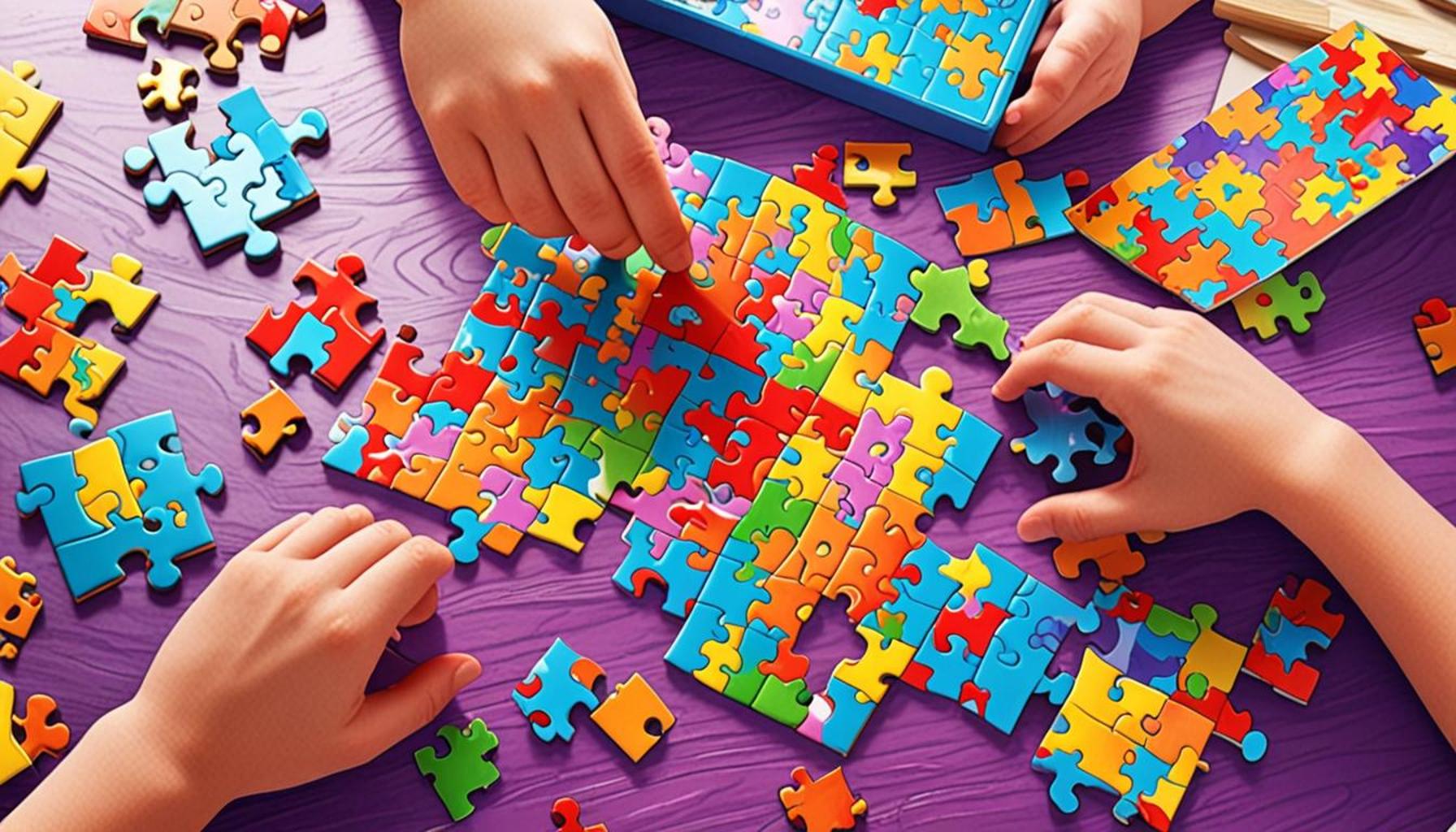
- Types of Visual Puzzles: Various forms of visual puzzles exist, each providing different challenges. Traditional jigsaw puzzles require assembling pieces to create a cohesive picture, which enhances spatial awareness and patience. Optical illusions, on the other hand, stimulate our perception by showcasing the complexities of visual cognition — think of the classic “Rubin’s Vase” that can be seen as either a vase or two faces depending on one’s perspective. Lastly, spot-the-difference games engage our observational abilities as we search for subtle discrepancies between images, honing our ability to notice finer details.
- Benefits of Solving Puzzles: The advantages of engaging with these puzzles extend beyond mere amusement. Regularly solving visual puzzles can lead to improved concentration, as the brain trains itself to focus on tasks while filtering out distractions. Additionally, it fosters better problem-solving abilities by encouraging us to think critically and creatively in order to complete each challenge. Enhanced cognitive functions, such as memory and processing speed, are also reported, offering a substantial boost to our mental agility.
- Target Audience: Visual puzzles are suitable for all age groups, making them a versatile tool for learning and entertainment. Children can develop key cognitive skills while playing, whereas seniors can engage in puzzles to maintain cognitive function and promote social interactions. Family game nights featuring puzzles can forge bonds and stimulate friendly competition, making them enjoyable for everyone.
Engaging with visual puzzles is more than just a pastime; it acts as a cognitive workout that trains the brain. Research suggests that regular exposure to these activities can lead to measurable improvements in both focus and attention to detail. Studies indicate that those who regularly solve puzzles perform better on tasks requiring concentration and critical thinking, making these puzzles a valuable addition to educational and recreational routines.
As the demands on our attention spans increase in this fast-paced world, the question arises: How can we harness the potential of visual puzzles in our daily lives? Parents might consider integrating puzzle time into family routines to foster a culture of concentration and creativity. Local libraries and community centers often host puzzle competitions or workshops, showcasing the collaborative spirit that comes with these engaging activities. Understanding their impact could lead to a transformative approach to enhancing our mental acuity and overall well-being.
Ultimately, embracing visual puzzles not only serves to enhance cognitive skills but also encourages a healthy form of leisure that can be pursued anytime, anywhere. With a wealth of resources available – from puzzle apps on smartphones to classic printed puzzles in newspapers – there’s no better time to start unlocking the power of visual puzzles.
DIVE DEEPER: Click here to uncover the secrets of puzzle-solving strategies

Enhancing Cognitive Skills Through Visual Puzzles
Visual puzzles have emerged as an effective way to boost attention to detail and focus, with numerous studies highlighting their cognitive benefits. As the brain engages with these intricate challenges, it begins to recognize patterns, distinguish between similar elements, and maintain concentration on tasks. This increased engagement can significantly enhance mental clarity and performance in various aspects of daily life.
Solving visual puzzles compels individuals to dedicate their mental resources to specific tasks, a practice widely known as focused attention training. This process not only helps in improving one’s ability to concentrate but also serves as a foundation for developing greater attention span over time. The act of piecing together jigsaw puzzles, for instance, involves breaking down a complex picture into manageable sections, encouraging deeper cognitive processing and patience as the solver strives to achieve a complete image.
Moreover, each type of visual puzzle offers unique cognitive challenges that target different cognitive functions:
- Jigsaw Puzzles: By requiring spatial reasoning and visual reconstruction skills, jigsaw puzzles boost both problem-solving abilities and patience. Participants engage in a process of trial and error, learning to analyze shapes and colors while enhancing their attention to detail.
- Optical Illusions: These brain teasers challenge perception and encourage individuals to look beyond the obvious. When faced with changing perspectives, solvers learn to adapt and sharpen their analytical skills, thereby improving overall focus.
- Spot-the-Difference Games: Such games train players’ observational skills as they meticulously search for subtle variations between images. This ongoing exercise hones the ability to detect discrepancies, a crucial skill that translates to everyday tasks – from reading fine print to noticing errors in work documents.
Engagement with these puzzles has also been associated with increased neuroplasticity, the brain’s ability to rewire itself in response to learning and experience. This adaptability enhances mental agility and cognitive function, which are essential for tackling challenges in both personal and professional life. A recent study by neuropsychologists found that individuals who regularly engage in puzzle-solving activities exhibited improved cognitive control, which is vital for filtering distractions and achieving sustained focus.
Incorporating visual puzzles into one’s routine can be simple and accessible. Many individuals can easily integrate puzzle-solving sessions into their day, whether it be during morning commutes, lunch breaks, or even family game nights. The beauty lies in the fact that these puzzles cater to all age groups, making them an excellent choice for individuals looking to sharpen their mental faculties regardless of their stage in life.
As we continuously search for methods to enhance attention to detail and focus, visual puzzles stand out as engaging and beneficial tools. Their ability to foster concentration in a distracted world makes them a valuable addition to our daily practices.
How Visual Puzzles Improve Attention to Detail and Focus
Visual puzzles are not only entertaining but also serve as powerful tools for enhancing cognitive skills, particularly attention to detail and focus. Engaging in activities like jigsaw puzzles, hidden object games, or even visual Sudoku necessitates a meticulous approach, pushing individuals to observe and analyze elements carefully. Evidence suggests that solving these puzzles can activate and strengthen neural pathways associated with concentration and meticulous observation.Furthermore, individuals who frequently tackle visual puzzles report improved memory retention and better problem-solving capabilities. This cognitive workout can translate into everyday tasks, allowing for greater accuracy in both professional and personal endeavors. Adults and children alike can benefit from setting aside time for puzzle-solving, transforming what was once merely a pastime into a vital exercise for the brain.Additionally, beyond developing foundational skills, visual puzzles are beneficial in honing patience and perseverance. As one works through challenges presented in these puzzles, frustration may arise, yet the reward of completion fosters a sense of accomplishment, boosting self-esteem and motivation. To illustrate the numerous benefits of visual puzzles further, consider the following table:
| Key Benefits | Impact on Skills |
|---|---|
| Enhanced Focus | Improved ability to concentrate on tasks, reducing distractions. |
| Attention to Detail | Increased capability to observe and analyze minute details effectively. |
Through the act of engaging with visual puzzles, individuals refine their cognitive abilities while enjoying a stimulating and rewarding activity. This proves that cultivating attention to detail and focus can be both productive and enjoyable. With continued exploration, there are numerous ways to integrate visual puzzles into daily routines, fostering mental agility and sharpening essential skills.
DIVE DEEPER: Click here to learn about the brain’s response to cognitive challenges</
The Psychological Benefits of Engaging with Visual Puzzles
In addition to cognitive enhancement, visual puzzles offer a range of psychological benefits that contribute to improved attention to detail and focus. Engaging in such activities can create a state of flow, which is characterized by complete immersion in a task, where time seems to vanish. This state not only fosters better concentration but also promotes a sense of satisfaction and achievement upon completing a puzzle.
Research indicates that puzzles can mitigate stress and anxiety, thereby providing a conducive environment for sustained attention. Engaging in repetitive and structured activities, like solving jigsaw puzzles or navigating through complex optical illusions, can help individuals momentarily escape from the pressures of daily life. This temporary distraction allows one’s mind to reset, contributing to improved mental clarity and a better focus on subsequent tasks.
Additionally, the social aspect of puzzle-solving can enhance focus through collaboration. Whether it’s working with family members on a jigsaw puzzle or engaging in a friendly competition with friends through spot-the-difference games, social interactions often stimulate cognitive function and increase motivation. Such cooperative efforts can encourage individuals to pay closer attention to the details as they discuss strategies and share insights, further enhancing collective focus and analytical capabilities.
Furthermore, the cultivation of patience that comes from visual puzzles cannot be overlooked. Completing a challenging puzzle requires persistent effort and systematic thinking. Individuals learn to analyze each piece, fostering a meticulous mindset. Over time, this practice can help translate into improved attention to detail in other areas of life, such as academic work or professional projects. In fact, studies suggest that engaging in puzzles increases one’s ability to focus on tasks that demand prolonged attention, making one less prone to distractions.
Visual puzzles are also being integrated into educational curriculums across the United States, as educators recognize their potential in enhancing student learning outcomes. Programs aimed at improving skills in math and science have adopted puzzle-solving techniques to bolster critical thinking and attention span. Schools have reported that students who engage in such activities exhibit greater concentration levels during lessons and improved performance in assessments.
Moreover, technology has made visual puzzles more accessible than ever. Mobile applications and online platforms offer a myriad of puzzle types catering to diverse audiences. Whether it’s a quick game during a lunch break or a more immersive experience during leisure hours, the availability of digital puzzles allows individuals to incorporate mental exercise into their daily routines effortlessly. Thus, enhancing attention to detail and focus through puzzles can be seamlessly integrated into modern lifestyles.
The continuous exploration of visual puzzles and their benefits has led to growing interest in their therapeutic applications as well. Psychologists are investigating how these cognitive activities can support individuals with attention-related challenges, paving the way for potential treatment methods that leverage the engaging nature of puzzles to improve focus and attentional control. As this area of research expands, the understanding of visual puzzles as tools for cognitive enhancement and emotional well-being will likely continue to deepen.
DISCOVER MORE: Click here to enhance your logical skills
Conclusion: Unleashing the Power of Visual Puzzles
In today’s fast-paced world, where distractions are abundant and attention spans are shrinking, the ability to sharpen attention to detail and focus has never been more crucial. The exploration of visual puzzles reveals their multifaceted benefits, encompassing both cognitive and psychological aspects. By engaging with these stimulating activities, individuals can tap into a state of flow, enhance mental clarity, and cultivate a meticulous mindset that ultimately translates into other areas of life.
The integration of visual puzzles into educational frameworks highlights their potential in improving focus and critical thinking skills among students. As educators embrace innovative approaches to learning, puzzles not only entertain but also empower learners to excel academically. Moreover, the rise of digital platforms makes these enriching experiences accessible to a wider audience, allowing for seamless incorporation into daily routines.
As researchers continue to delve deeper into the therapeutic value of visual puzzles, promising avenues for assisting those with attention-related challenges are emerging. These engaging tools may present novel strategies for promoting attentional control and mental well-being, making them invaluable resources in both educational and therapeutic contexts.
In conclusion, the insights gained from understanding how visual puzzles can enhance attention to detail and focus encourage us to embrace these activities not only as enjoyable pastimes but also as powerful tools for personal development. By participating in puzzle-solving, individuals can foster their cognitive capabilities and nurture a mindset poised for success, paving the way for a more focused and detail-oriented future.