Famous Brain Teasers and Their Cultural Origins
Exploring the Cultural Depth of Mind Puzzles
Brain teasers are not merely challenging tasks designed to engage our minds; they offer an intriguing lens through which we can observe and analyze various cultural dimensions. These puzzles go beyond entertainment, serving as cultural artifacts that encapsulate the values, traditions, and peculiarities of the societies from which they originate.
Among the diverse range of mind puzzles, some have left an indelible mark on history and intellectual thought. Each puzzle tells a story—an intertwining of culture and cognitive challenge. Let’s delve into a few notable examples that showcase the rich tapestry of human thought across different civilizations:
- The Sphinx’s Riddle – Originating from Ancient Egypt, this riddle challenges the listener with the question: “What walks on four legs in the morning, two legs at noon, and three legs in the evening?” The answer, ‘man’, unfolds a deeper philosophical exploration of human life stages. This riddle not only reflects the Egyptians’ value on wisdom but also serves as a timeless invitation to ponder human existence.
- Chinese Tangrams – This ancient dissection puzzle consists of seven flat pieces called tans that can be arranged to form a square. The goal is to replicate a particular shape using all seven pieces but without overlapping. Besides being a fun recreational activity, Tangrams have been used to teach geometry and spatial awareness, highlighting the Chinese commitment to education and intellectual development.
- The Monty Hall Problem – Rooted in American pop culture, this probability puzzle emerged from a game show scenario where a contestant must choose between three doors, behind one of which is a car. After one non-winning door is revealed, the contestant is given the chance to switch their choice. Surprisingly, statistical analysis shows that switching increases the probability of winning from 1/3 to 2/3. This riddle not only showcases American game show culture but also illustrates the complexities and misconceptions people hold regarding probability theory.
Each of these puzzles not only challenges our cognitive abilities but also serves as a unique cultural narrative steeped in history and tradition. They compel us to engage with the intricacies of thought processes and societal values, reminding us that our understanding of the world is often interwoven with the cultures we belong to or encounter.
As we journey further into the realm of famous brain teasers, we uncover not just their intellectual allure but also the historical and cultural contexts that birthed them. These mind puzzles invite us not only to solve them but to appreciate the cultural richness they represent. Join us in this exploration as we unravel the stories that these intriguing puzzles reveal and their relevance in our everyday lives.
DIVE DEEPER: Click here to unlock more insights
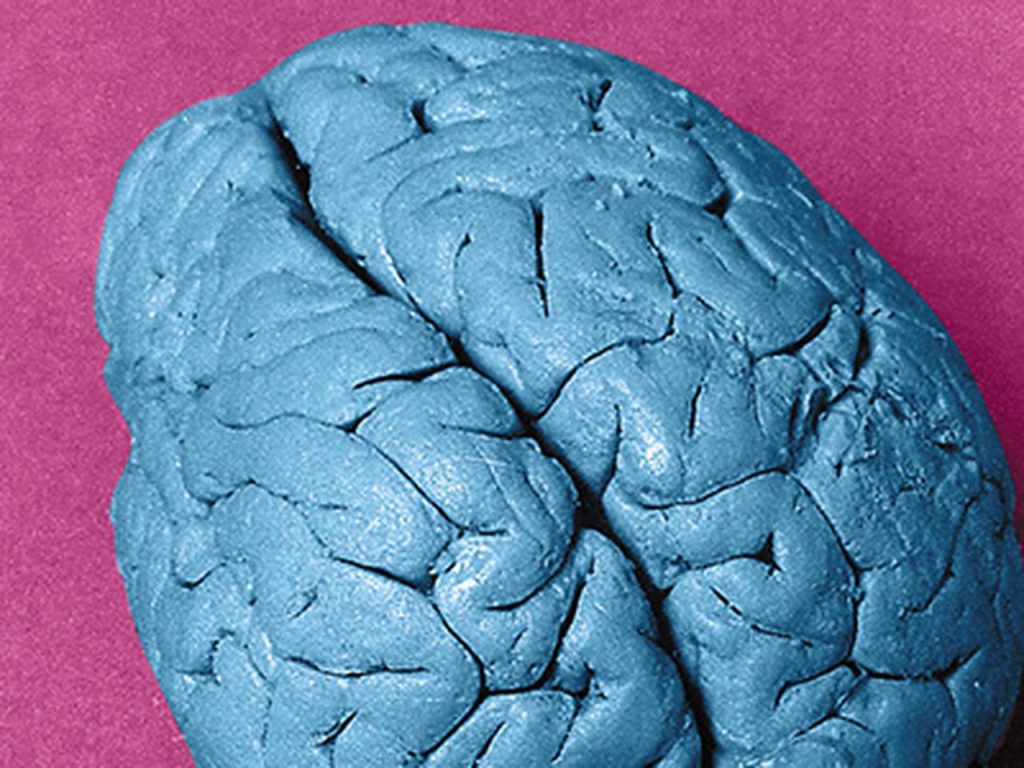
Unraveling the Minds Behind the Puzzles
As we dive deeper into the historical tapestry of brain teasers, we uncover a myriad of puzzles that resonate with the cultures from which they emerged. Each brain teaser reflects not only the intellectual curiosities of its time but also the social norms, educational philosophies, and even the humor of the people. From ancient civilizations to modern cultures, the following examples illustrate how brain teasers serve as mirrors, reflecting the collective psyche of their societies.
- The Three Gods Riddle – A thought-provoking conundrum from the realm of logic, this riddle features three gods named A, B, and C, who are either truthful, lying, or random in their responses. The goal is to determine which god is which by asking them a maximum of three yes-or-no questions. Recognized for its complexity, this riddle hails from the mind of philosopher and mathematician Raymond Smullyan and showcases a technique commonly engaged in in Eastern philosophical thought where deduction and reasoning are prized.
- Einstein’s Riddle – Allegedly created by Albert Einstein as a child, this logic puzzle presents five houses in different colors, each occupied by citizens of various nationalities, owning different pets, and preferring different drinks. The challenge lies in determining who owns the fish. This riddle emphasizes the value of deductive reasoning and critical thinking, reflecting the European appreciation for intellectual challenges. Many people have long attributed varying degrees of genius to Einstein, but this riddle particularly highlights the methodical approach often characteristic of his scientific endeavors.
- The Chicken and the Fox – This classic puzzle demonstrates the art of strategic thinking prevalent in Western folklore. The challenge is to transport a chicken, a fox, and a bag of grain across a river without leaving the chicken alone with the fox or the chicken alone with the grain. This riddle not only demonstrates logical problem-solving but also connects to the agricultural roots of many American cultures. The imagery of rural life speaks to values associated with farming and sustenance, making it a perennial favorite in American storytelling.
These brain teasers represent more than just a test of logic; they encapsulate cultural narratives and philosophical queries inherent to their origins. They encourage participants to engage not merely with the solution but with the underlying reasoning that drives human thought and interaction. Additionally, they offer insights into how society at large approaches challenges—whether through cooperation, deduction, or strategic maneuvering.
In analyzing these famous brain teasers, we appreciate how cultural backgrounds influence reasoning styles, educational exposure, and even humor. As we continue our exploration of these fascinating puzzles, we will further uncover the connections between these seemingly simple challenges and the complex cultural narratives they embody.
| Cultural Origins | Intriguing Insights |
|---|---|
| Asian Parables | Often embedded in moral lessons, these puzzles reflect the philosophical roots of Eastern thought, engaging the mind in a quest for meaning. |
| Western Logic | Unique puzzles such as the Socratic paradoxes challenge conventional reasoning, illuminating the historical foundations of Western philosophy. |
| Folkloric Riddles | Rooted in community tradition, these oral teasers serve to pass wisdom across generations, enhancing cultural cohesion. |
| Mathematical Challenges | From ancient Greece to modern times, mathematical brain teasers highlight numerical creativity and the evolution of logic in different cultures. |
The cultural origins of famous brain teasers unleash a treasure trove of wisdom and creativity from around the globe. Each puzzle is more than mere entertainment; it encapsulates the values, history, and intellect of the culture it represents. For instance, Asian parables often intertwine existential queries with playful riddles, encouraging not just problem-solving but also deep reflection. Meanwhile, the Western logic puzzles typified by Socratic teachings dissect conventional reasoning, pushing minds to expand their thinking.In many indigenous cultures, folkloric riddles act as cultural vessels, transporting age-old wisdom through generations, while mathematical challenges demonstrate a civilization’s advancements in numerical reasoning. By unraveling these brain teasers, one engages not only with puzzles but with the rich tapestry of human thought and innovation. This unfurling insight invites readers to embark on their journey through the vast landscape of brain teasers, rich with cultural significance and intellectual challenge.
DIVE DEEPER: Click here to discover more about cognitive challenges
Connecting Cultures Through Challenges
Building on the idea that brain teasers are reflections of cultural paradigms, we find even more fascinating examples that weave together gameplay, social interaction, and tradition. These puzzles not only stimulate intellectual engagement but also act as tools for social bonding and cultural exchange. Here, we delve into more renowned brain teasers that illustrate the intricate relationship between logic and the societies that birthed them.
- The Seven Bridges of Königsberg – This early mathematical puzzle, originating from the city of Königsberg, now known as Kaliningrad in Russia, challenges thinkers to devise a way to cross all seven bridges without traversing any bridge more than once. Mathematician Leonard Euler turned this seemingly simple problem into a foundation for graph theory, highlighting the interplay between navigation, geographic knowledge, and social geography of the 18th century. The riddle showcases the practical application of mathematics in everyday life, reflecting European Enlightenment values concerning reason and logic.
- The Monty Hall Problem – Rooted in probability theory, this riddle is named after the host of the American television game show “Let’s Make a Deal.” Contestants are presented with three doors, behind one of which lies a valuable prize. After selecting a door, the host reveals a non-winning door and offers the contestant a choice: stick with their original pick or switch to the remaining door. The counterintuitive odds of improving one’s chances by switching amplify the demonstration of probabilistic reasoning in American culture and how intuition often clashes with mathematical logic. This brain teaser encourages discussions about human decision-making, reflecting broader themes of choice and chance in a society that embraces competition.
- Logic Grid Puzzles – Popular in the United States and often featured in newspapers, logic grid puzzles require solvers to make deductions in order to fill in a grid with correct associations between items. These puzzles vary in complexity but generally challenge individual reasoning skills while fostering group discussions. They draw on the American emphasis on problem-solving and critical thinking, serving as an educational tool that activates cooperative learning through shared reasoning experiences. This aligns with educational standards in the U.S. that advocate for collaborative and interactive problem-solving methodologies.
Each brain teaser offers a glimpse into the thought processes valued within its originating culture and serves broader educational functions. The challenges they present resonate with moral lessons, encourage social interaction, and provide a cultural context that enriches the experience of solving them. As we analyze these enigmatic riddles, we start to see a pattern: they engage participants not just intellectually, but emotionally and socially, enhancing the connection between individuals and their collective heritage.
Furthermore, the dialogues surrounding these puzzles encourage meta-cognitive skills, prompting individuals to reflect on how they approach problems and make decisions. As puzzles transcend borders, they allow cultural exchanges to flourish, making problem-solving an international language of its own. In this way, brain teasers do not just stand as isolated enigmas; they act as bridges, linking diverse ways of thinking and understanding across different societies. The tapestry of thought woven by these puzzles tells a story—one that continues to evolve, inviting each generation to contribute their ideas and insights.
DISCOVER MORE: Click here to delve into the brain’s response to challenges
Conclusion: The Lasting Legacy of Brain Teasers
Through the lens of famous brain teasers and their cultural origins, we uncover not just puzzles to tickle the mind, but also snapshots of the societies that nurture them. Each riddle and challenge presents a unique marriage of logic, cultural values, and social norms, illustrating how humanity has grappled with the complexities of thought and decision-making throughout history. From the mathematical underpinnings of Euler’s Seven Bridges of Königsberg to the probabilistic adventure of the Monty Hall Problem, these challenges provide rich insights into the cognitive frameworks that guide our interactions and decisions.
Moreover, the role of logic grid puzzles in American culture epitomizes the emphasis placed on collaborative problem solving and critical thinking, further supporting the notion that these brain teasers serve as tools for educational and social engagement. They invite discourse, enhance understanding, and foster connections across differing cultural landscapes, proving that the art of puzzling transcends mere entertainment.
In a world increasingly defined by interconnectivity, brain teasers stand as bridges that connect varied ways of thinking and interpretive lenses. As we delve into these enigmatic challenges, we not only sharpen our minds but also celebrate the rich tapestry of human experience. This ever-evolving landscape of puzzles invites us all to participate, to learn, and to forge deeper relationships with one another—not just as solvers of riddles, but as members of a globally linked community where our cultural heritages continue to inspire and intrigue. The quest for understanding through brain teasers is a journey worth embarking on, reflecting the enduring nature of curiosity and cognitive challenge across all cultures.