
The Intersection of Logic Exercises and Artificial Intelligence: What We Can Learn from Machines
Understanding the Evolving Landscape of AI and Logic
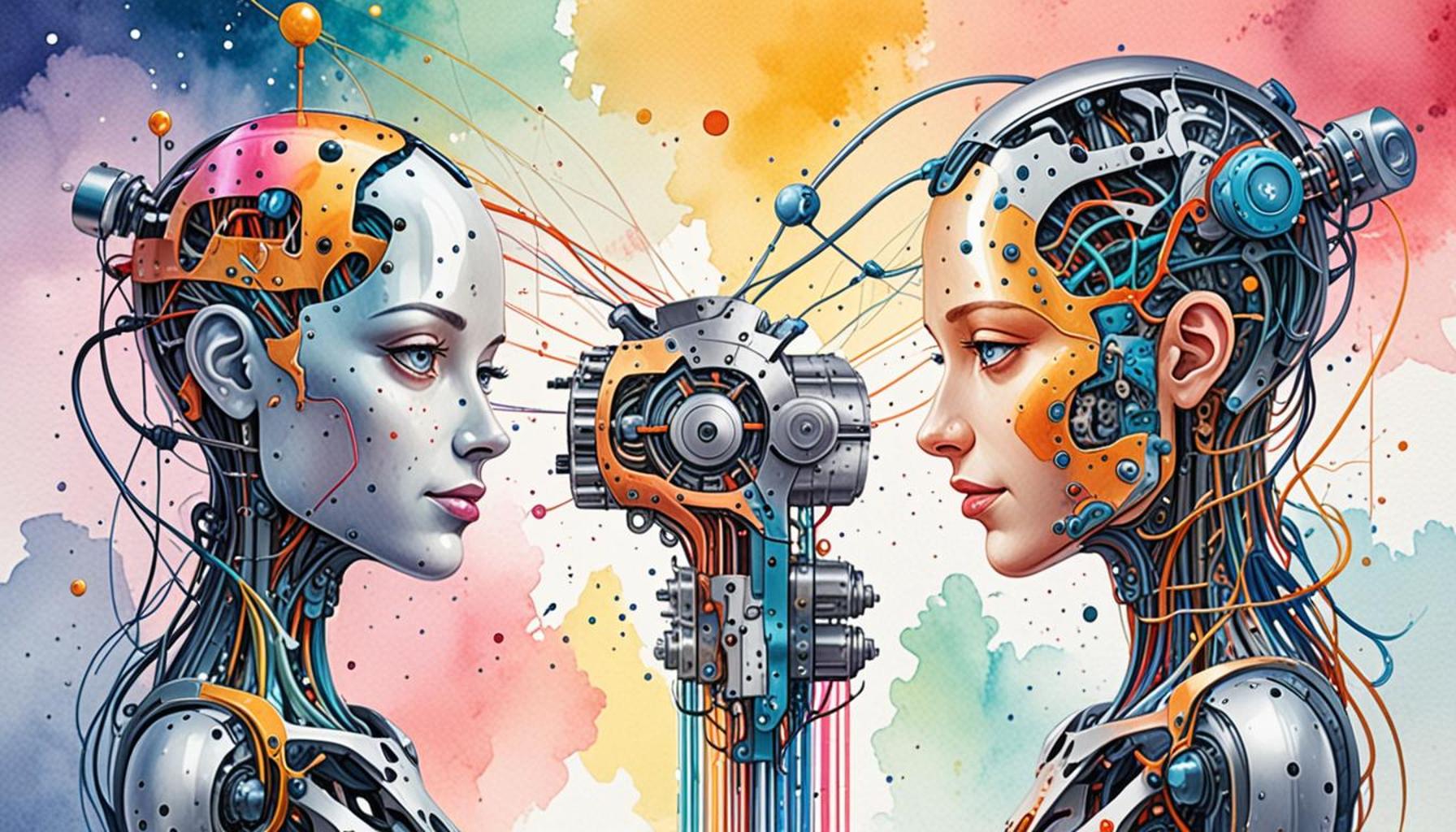
The field of artificial intelligence (AI) presents a remarkable evolution in technology that continuously alters our approach to reasoning and problem-solving. As machines gain the ability to perform complex reasoning tasks traditionally dominated by human intelligence, it provokes thought about the very nature of human decision-making and logical reasoning processes. This intriguing juxtaposition opens up multiple avenues for exploration and investigation into the cognitive capabilities of both AI and humans.
The Role of Problem Solving in AI
One of the most fascinating areas of AI is its approach to problem-solving. Unlike humans, who often rely on intuition or past experiences when faced with a complex puzzle, AI algorithms employ mathematical models and historical data to identify feasible solutions. For instance, Google’s DeepMind developed an AI system called AlphaGo that defeated the world champion Go player. This accomplishment was not merely a victory in traditional gaming but a demonstration of how AI can navigate a vast number of possible moves and outcomes to arrive at logical conclusions. Such examples underscore the efficiency and precision of AI in solving intricate problems, frequently outperforming human intuition.
Learning Mechanisms of Machines
The learning mechanisms of AI systems further blur the lines between human and machine reasoning. Through techniques such as machine learning and deep learning, AI can analyze vast datasets, identify patterns, and refine its logic over time. Specifically, these systems apply algorithms that learn from their mistakes, improving their decision-making capabilities in subsequent tasks. For example, autonomous vehicles utilize reinforcement learning, where they adapt their driving strategies based on continual feedback from their environment, enhancing both safety and efficiency. This adaptive learning process is akin to how people learn from experience, showcasing a vital similarity between human and machine cognition.
Decision-Making Frameworks in AI
Additionally, decision-making frameworks provide a striking lens through which to examine the parallels and contrasts between AI and human reasoning. AI systems typically employ probabilistic reasoning and data-driven approaches, making decisions based on statistical likelihoods rather than emotional or situational context that often guides human choices. For instance, AI models used in finance analyze market trends to predict stock performance, free from the biases that can influence human traders. This statistical basis for decision-making can lead to more objective conclusions, yet it also highlights a limitation in the absence of human-like emotional intelligence.
Enhancing Human Cognition Through AI
The exploration of AI’s logical prowess offers valuable insights into enhancing our own cognitive skills. By understanding how AI approaches reasoning and problem-solving, we can adopt strategies that improve our analytical capabilities. Engaging with logic exercises, participating in AI-driven simulations, or studying AI methodologies can cultivate a deeper awareness of our thought processes and decision-making styles. In embracing this intersection of human and machine thinking, we not only broaden our understanding of AI but also empower ourselves to evolve intellectually.
As we journey through this dynamic landscape, it’s paramount to consider the implications of AI on human reasoning. The dialogue surrounding this topic extends to ethics, creativity, and the future of collaboration between humans and machines. By examining these elements, we stand to gain not just knowledge but also a more profound comprehension of what it means to think and reason in an increasingly AI-driven world.
DISCOVER MORE: Click here to delve deeper
Logic Exercises: Bridging Human Reasoning and Machine Intelligence
As we delve deeper into the realm of logic exercises in conjunction with artificial intelligence, we uncover a unique synergy that enhances both human cognitive abilities and machine efficiency. The practice of engaging with logic puzzles and reasoning challenges serves to fine-tune our mental faculties, allowing us to grasp complex information and draw meaningful conclusions. This intellectual engagement mirrors how AI systems tackle problems using structured approaches to logic, often revealing fascinating insights into both domains.
The Benefits of Logic Exercises for Human Cognition
Traditionally, logic exercises have been utilized in various fields, from education to professional training. These exercises are not simply trivial pursuits; they are essential tools that cultivate critical thinking and problem-solving skills. By regularly engaging with logic problems, individuals can:
- Enhance Analytical Skills: Logic exercises challenge us to analyze information critically and systematically, laying the groundwork for sound decision-making.
- Improve Cognitive Flexibility: Although machines excel in this area, humans can benefit from developing the flexibility to switch between different concepts and ideas.
- Boost Memory and Concentration: Regularly solving logical puzzles sharpens memory retention and focus, as individuals learn to concentrate on relevant details.
The relationship between these exercises and the methodologies employed in artificial intelligence adds a layer of depth to our understanding of cognitive processes. Machine reasoning not only follows a logical framework but also analyzes and synthesizes data, a characteristic that we can recreate to a certain extent through rigorous practice of logic challenges.
Machine Learning as a Reflection of Human Logic
In the sphere of AI, the logic utilized in machine learning algorithms often mirrors human problem-solving approaches. These algorithms use statistical models to generalize learned patterns from data. Consider the classic example of decision trees, a popular method in machine learning that begins with a clear question at each node, branching out based on the answers provided. This hierarchical structure is reminiscent of how people navigate logical problems—step by step, simplifying complexity into manageable parts.
Moreover, as AI learns from vast amounts of data, it often rebounds to alter its logical frameworks, much like humans who adjust their reasoning based on new experiences. This parallel offers rich insights into how we might improve our own logical reasoning capabilities by attempting to understand how machines process information.
Integrating AI and Logic Exercises for Growth
The intersection of logic exercises and AI encourages both individuals and organizations to adopt a more systematic approach to problem-solving. By combining traditional reasoning skills with AI tools, we can create an environment that fosters logical thinking and innovation. Many educational institutions and businesses across the United States are already leveraging this intersection by:
- Incorporating Logic Games: Utilizing AI-powered educational platforms that offer interactive logic puzzles to enhance learning.
- Conducting Workshops: Hosting workshops that focus on improving logical reasoning through the analysis of AI decision-making processes.
- Collaborative Learning: Creating settings where humans and AI work together to tackle complex challenges, thus fostering growth in logical reasoning.
Understanding the interplay between human cognition and artificial intelligence not only enriches our logical capabilities but also paints a broader picture of the future relationship between humans and machines. As we continue to explore this compelling intersection, our pathways for intellectual growth become increasingly diverse and dynamic.
| Advantages of Logic Exercises | Applications in AI |
|---|---|
| Enhances problem-solving skills | Logic exercises allow AI to tackle complex puzzles, much like humans, improving its decision-making process. |
| Boosts cognitive flexibility | By engaging with various reasoning tasks, AI systems become adaptable, learning from a wide range of scenarios for better outcomes. |
| Improves memory retention | As AI processes logic puzzles, it refines its algorithms, ensuring vital data is retained and utilized efficiently. |
| Encourages analytical thinking | These exercises help AI develop strategies, mirroring human analytical processes to enhance machine learning techniques. |
The integration of logic exercises in artificial intelligence not only sharpens the machine’s aptitude for complex reasoning but also mirrors essential human cognitive functions. These exercises foster an environment where AI can evolve, helping it not just to simulate human-like decision-making but to inspire deeper investigations into the limits and potentials of machine learning. As we delve into this intriguing intersection, we discover that AI’s advancements in reasoning can inform educators, tech developers, and cognitive scientists alike, opening up unprecedented avenues for research and development. Whether it’s optimizing algorithms or understanding human thought processes better, the relationship between logic exercises and AI propels us toward a future where education and technology intersect more seamlessly than ever before—including potential real-world applications in fields such as robotics, data analysis, and beyond.
DIVE DEEPER: Click here to enhance your skills
Revealing Insights: How AI Informs Logic Development
The exploration of artificial intelligence within the realm of logic exercises not only benefits human cognitive development but also enriches our understanding of the inner workings of AI itself. By delving into AI’s methods of reasoning, individuals can begin to see their own thought processes illuminated, unveiling both strengths and weaknesses in *logical reasoning*. This symbiotic relationship between human logic and machine intelligence offers a vivid landscape of insight for educators, students, and professionals alike.
AI Algorithms: A Model for Structured Thought
Algorithms form the backbone of AI, and learning how they operate reveals significant parallels with human reasoning. For instance, AI uses algorithms such as neural networks to mimic how the human brain processes information. Through a web of interconnected nodes, these networks draw upon vast datasets to identify patterns, akin to how humans deduce conclusions from various premises. This highlights a potent lesson: our existing skills in inductive and deductive reasoning can benefit from the structured frameworks that AI employs.
Consider the use of natural language processing (NLP), an area where machines understand and generate human language. Analyzing how NLP techniques parse language can enhance our own understanding of logical constructs in communication. For example, understanding context, semantics, and syntax—the building blocks of human language—can be mirrored in training sessions where these linguistic principles are applied to resolve logical exercises. Such practices promote awareness of ambiguity in both language and logic, deepening our reasoning capabilities.
The Role of Data in Learning Logic
Central to the effectiveness of AI is the role of data in informing decisions. As AI systems ingest increasingly sophisticated datasets, they iterate and refine their logic frameworks. This aspect invites a striking comparison with the learning models used by humans. Just as AI requires diverse and extensive data to learn accurately, individuals also need rich experiences to hone their logical reasoning skills.
The significance of data underscores a tangible strategy for educators and trainers: integrating diverse case studies and real-world scenarios into logic exercises can simulate the data-driven environments in which AI thrives. This approach not only gives context to abstract logic problems but also prepares learners to tackle actual challenges with enhanced analytical prowess.
Challenges and Opportunities for Growth
Despite the promising integration of AI with logic exercises, there are challenges that require attention. One primary concern is the danger of relying too heavily on AI, which may inadvertently stifle the development of independent reasoning skills. While AI can inform and guide, it’s crucial that learners maintain a balanced approach, blending the logic of machines with their own cognitive practices.
- Encouraging Independent Reasoning: Balancing AI assistance with exercises that promote individual logical thought is essential to foster a generation of independent problem solvers.
- Critical Engagement with AI: Rather than accepting machine-generated solutions at face value, learners can engage critically, questioning and evaluating the logic behind AI decisions to reinforce their understanding.
- Staying Adaptive: As the landscape of AI evolves, maintaining flexibility in learning methods will ensure that skills remain relevant and robust in the face of rapid technological advancements.
By embracing the challenges and opportunities presented by the intersection of AI and logic exercises, individuals can pave the way for comprehensive personal and professional development. The potential for greater logical capacities, informed by machine intelligence, places human learners in a unique position where they can leverage insights from both realms effectively. This evolving dynamic promises an exciting future for education and cognitive enhancement.
DISCOVER MORE: Click here to dive deeper
Conclusion: Embracing the Synergy of Logic and Artificial Intelligence
The intersection of logic exercises and artificial intelligence offers a profound opportunity for growth in cognitive development and analytical reasoning. As we stand at the crossroads of human thought and machine learning, it is clear that both spheres can significantly enrich each other. Observing AI’s structured approach to reasoning invites individuals to reflect on their own thought processes, encouraging a more nuanced understanding of logical principles. This dialogue between human and machine not only enhances personal reasoning skills but also equips learners with adaptable frameworks to confront an increasingly complex world.
As we dive into AI-driven methodologies, it is essential to harness their potential while cultivating independent reasoning skills. The goal should be to strike a harmonious balance where AI serves as a guide rather than a crutch. This balance is vital, as fostering critical engagement with AI systems helps individuals question, validate, and ultimately fortify their logical frameworks. By integrating data-driven insights from AI into education—using rich case studies and real-world applications—educators can enrich the learning experience, preparing students for future challenges.
In conclusion, the evolving dynamic between logic exercises and artificial intelligence is not merely a technological enhancement; it is an exploration of human thought itself. As we adapt our learning methodologies to incorporate the strengths of AI, we position ourselves not only as consumers of technology but as skilled navigators of knowledge and reason. Embracing this synergy paves the way for a brighter, more insightful future in education and beyond, where both human and machine intelligence can thrive collectively.