The Role of Visual Puzzles in Enhancing Perception and Problem Solving
The Allure of Visual Puzzles
Have you ever found yourself captivated by an intricate illustration that seems to play tricks on your mind? Visual puzzles have a unique way of engaging our cognitive faculties, compelling us to look deeper and think critically. They invite participants into a world of exploration and problem-solving, tapping into our innate curiosity and creativity. By decoding these visual enigmas, individuals sharpen essential cognitive skills and enjoy a mentally stimulating experience.
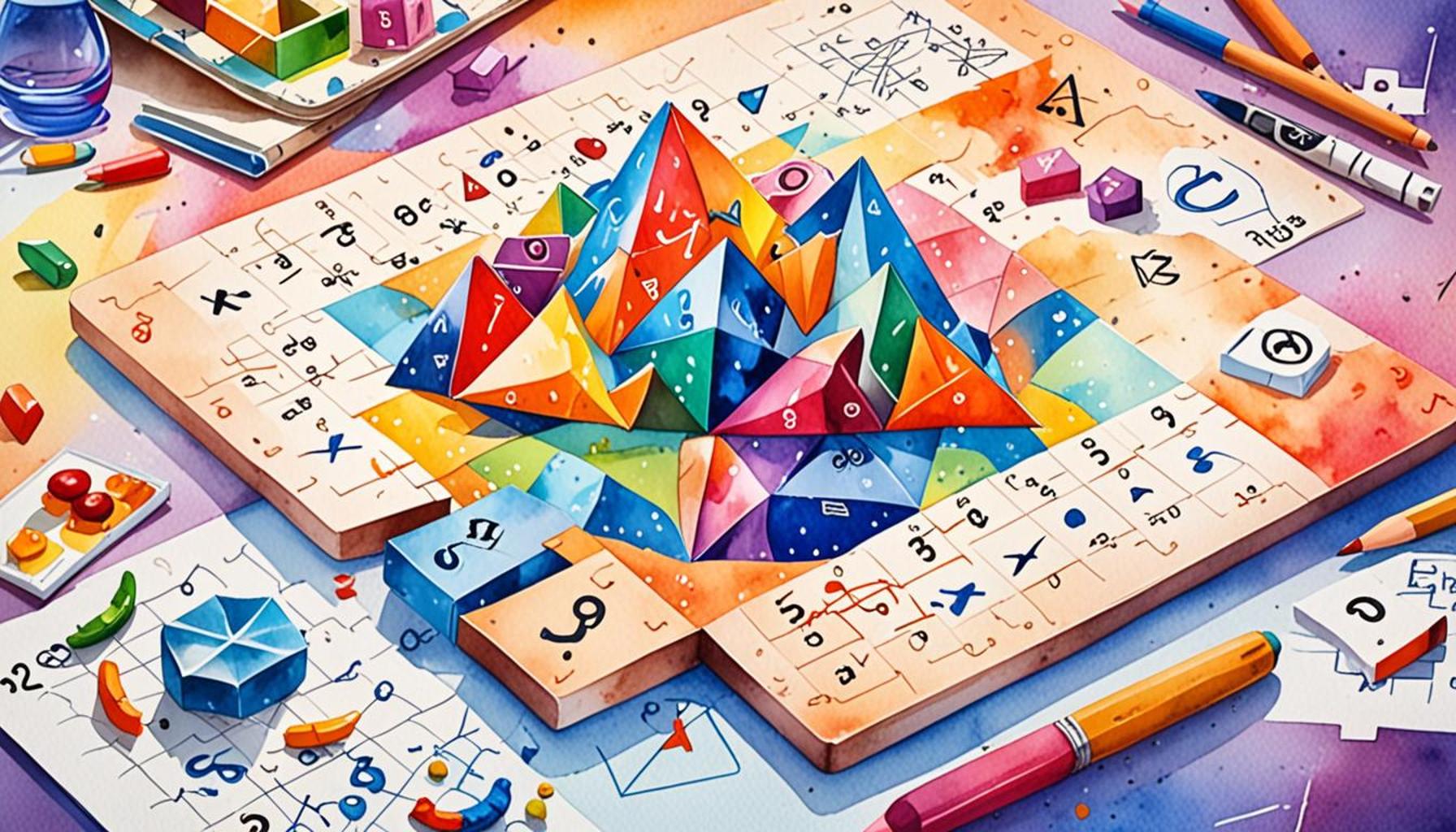
Visual puzzles come in an array of engaging formats, each designed to challenge and enhance different aspects of mental agility. For instance:
- Image-Based Riddles: These puzzles require keen observation and the ability to decipher clues hidden within images. A classic example is the “Where’s Waldo?” series, where the challenge lies in spotting the elusive character among crowded and chaotic scenes.
- Optical Illusions: These fascinating visuals manipulate perception, forcing viewers to question what is real. The famous Müller-Lyer illusion, where lines of the same length appear to be different based on the direction of arrowheads, highlights how our brains can interpret visual information inaccurately.
- Logic Games: Such puzzles, like Sudoku or nonogram puzzles, foster critical thinking through systematic approaches. They require players to apply logic and reasoning to arrive at solutions, reinforcing the importance of methodical thinking.
Research supports the myriad cognitive benefits that engaging with visual puzzles can provide. Studies indicate that consistent interaction with these brain teasers leads to:
- Improved Spatial Awareness: Engaging with visual puzzles enhances one’s ability to visualize and manipulate objects in the mind’s eye, a skill that is particularly beneficial in fields such as architecture and engineering.
- Boosted Problem-Solving Skills: Tackle visual puzzles encourages innovative thinking and adaptability. The flexibility in problem-solving can translate into real-world applications, empowering individuals to handle unexpected situations with confidence.
- Heightened Focus and Concentration: The need to decipher complex images trains the brain to sustain attention on specific tasks over extended periods, a valuable skill in our distraction-filled digital age.
As we delve further into the realm of visual puzzles, it becomes evident that these engaging tools do not simply entertain; they hold the potential to transform our perception and enhance our cognitive capabilities. From improving critical thinking to boosting creativity, visual challenges are not just pastimes—they are gateways to cognitive enhancement. Prepare to embark on a thrilling journey through this fascinating domain, where every puzzle presents an opportunity to grow and discover anew.
DON’T MISS: Click here to enhance your child’s thinking skills

Unlocking Cognitive Potential Through Visual Puzzles
Visual puzzles are more than mere distractions; they are gateways to enhanced cognitive abilities. Engaging with these puzzles can significantly contribute to the development of perception and problem-solving skills, ushering individuals into a realm where imagination and logic converge. A recent study by researchers at the University of California found that individuals who regularly engage in visual puzzles demonstrate superior skills in spatial reasoning and visual processing compared to their counterparts who do not.
One of the most crucial aspects of working with visual puzzles is the enhancement of visual perception. This refers to the brain’s ability to interpret visual stimuli, which is critical in daily life activities. For instance, navigating through a busy environment or interpreting complex diagrams in professional settings requires acute visual perception. Engaging with puzzles helps to refine this skill in an enjoyable manner. By seeking hidden patterns or solving intricate riddles, individuals train their brains to recognize details that might otherwise go unnoticed.
Furthermore, visual puzzles encourage the development of problem-solving strategies. The process of tackling a challenging puzzle demands a systematic approach, thus mimicking real-world problem-solving situations where innovative thinking is required. Here are some specific ways visual puzzles enhance this skill:
- Analytical Thinking: Dissecting a visual puzzle involves breaking down complex images into manageable components, fostering analytical thinking required in fields such as science and technology.
- Creative Solutions: Each puzzle presents multiple possibilities for solutions, encouraging out-of-the-box thinking. This flexibility is invaluable when confronting everyday challenges.
- Persistence and Resilience: Many visual puzzles require a degree of trial and error, teaching individuals to persevere and adapt their strategies in the face of obstacles.
In addition to fostering cognitive growth, visual puzzles also contribute to emotional well-being. Successfully solving a challenging puzzle can provide a sense of accomplishment and boost confidence. This emotional uplift can promote further engagement with cognitive tasks, creating a positive feedback loop that enhances both personal growth and mental resilience.
The world of visual puzzles is rich and varied, presenting an opportunity for individuals to explore their cognitive limits. From the simple joys of spotting optical illusions to the rigorous demands of solving complex logic puzzles, these activities cater to a diverse range of interests. The myriad benefits they offer are not confined to entertainment; they are vital tools in enhancing perception and refining problem-solving skills, crucial for navigating the complexities of modern life.
| Advantages | Key Contributions |
|---|---|
| Cognitive Development | Engagement with visual puzzles stimulates brain activity, enhancing skills such as critical thinking and logical reasoning. |
| Enhanced Perceptual Skills | Visual puzzles improve spatial awareness and visual analysis, allowing individuals to interpret complex information more effectively. |
| Problem-Solving Strategies | They encourage innovative thinking and exploration of multiple solutions to a single problem, fostering creativity. |
| Collaborative Learning | Solving puzzles in groups promotes teamwork and communication skills, which are essential in professional settings. |
Visual puzzles serve as exceptional tools for enhancing individual capabilities. Engaging regularly with these cognitive challenges can significantly boost one’s ability to grasp complex scenarios and remain adaptable in problem-solving environments. The mixed avenues provided by these puzzles facilitate deeper exploration into one’s inherent cognitive abilities. As studies continue to affirm, not only do visual puzzles sharpen one’s perceptual skills, but they also invoke excitement and curiosity, encouraging further investigation into diverse solutions. Whether it be through solitary play or group activities, the multitude of benefits they offer underscores their importance in educational and professional contexts alike, providing ample reasons for further engagement in this intriguing field.
DIVE DEEPER: Click here for an in-depth look
Navigating Challenges: The Science Behind Visual Puzzles
Delving into the mechanics of how visual puzzles enhance cognitive functions reveals a fascinating interplay of psychology and neuroscience. Understanding this relationship can provide insight into why activities such as jigsaw puzzles, Sudoku, and visual brain teasers are effective tools for mental engagement and development. Research has established that engaging with visual puzzles can activate and strengthen specific neural pathways associated with both perception and problem-solving.
One noteworthy study conducted by the University of Cambridge highlighted that puzzle-solving activities can significantly enhance neural efficiency. Participants who regularly engaged in visual puzzles showcased improved cognitive control—essential in managing attention and resisting distraction. This is particularly crucial in high-pressure environments, such as workplaces where multitasking is often required. By training the brain to remain focused while deciphering complex visual patterns, individuals can experience not just improvement in specific task execution but overall productivity in their professional lives.
Moreover, specific types of visual puzzles hone particular skills. For instance:
- Spatial Awareness: Engaging in 3D puzzles, like Rubik’s cubes or complex block games, strengthens spatial awareness, allowing individuals to better visualize objects in three-dimensional space. This is essential for professions ranging from architecture to engineering.
- Critical Thinking: Visual logic puzzles develop critical thinking capabilities. They challenge one to think step-by-step or consider multiple angles before arriving at a solution, which is an asset in educational settings and decision-making processes.
- Memory Training: Many visual puzzles, such as memory matching games, significantly enhance short-term memory. Improved memory recall not only aids in puzzle-solving but also benefits everyday tasks like remembering directions or grocery lists.
In addition to cognitive benefits, visual puzzles foster a sense of community when tackled in groups. Many people enjoy sharing puzzle experiences, whether they are working on a complicated jigsaw puzzle at home with family or solving visual riddles in a team-building workshop. The collaborative nature of solving these puzzles can improve communication skills and strengthen relationships among participants, highlighting an essential social component of this activity.
The role of technology in visual puzzles cannot be overstated either. With the rise of mobile applications and online platforms, individuals now have an abundance of interactive visual puzzles at their fingertips. This accessibility not only encourages persistent engagement but also allows users to track their progress and challenge themselves over time. A 2022 survey revealed that 65% of respondents who frequently used puzzle apps noted improvements in their cognitive performance, further emphasizing the significance of these tools in daily mental conditioning.
As visual puzzles continue to evolve, incorporating augmented reality and adaptive algorithms, the scope for enhancing perception and problem-solving skills expands even more. This evolution ushers in exciting possibilities for educational systems, professional training programs, and personal development strategies. By understanding how visual puzzles ignite the brain’s potential, individuals can better harness their cognitive abilities and apply them effectively in various aspects of life.
DISCOVER MORE: Click here to enhance your problem-solving skills
Unlocking Potential: The Lasting Impact of Visual Puzzles
In conclusion, the multifaceted benefits of visual puzzles extend far beyond mere entertainment; they play a pivotal role in enhancing perception and sharpening problem-solving abilities. By harnessing the power of cognitive engagement through various types of puzzles, individuals can cultivate essential skills such as critical thinking, memory training, and spatial awareness. The scientific evidence supporting these enhancements underscores the importance of integrating visual puzzles into daily routines, whether they be in educational environments, workplaces, or casual settings at home.
The social dimension of puzzle-solving fosters connections and community building, proving that collaboration can further amplify cognitive benefits. As technology continues to innovate, making interactive visual puzzles increasingly accessible, more individuals can reap these rewards. The digital realm offers countless opportunities for brain training, emphasizing the significance of continuous mental challenge.
Furthermore, with advancements in augmented reality and personalized algorithms, the potential for visual puzzles to evolve and cater to individual needs is boundless. This opens doors for transformative applications in personal development and professional training, laying the groundwork for a smarter, more adaptable workforce. Therefore, as we delve into the world of visual puzzles, we are not only enhancing our cognitive skills but also embarking on a path of lifelong learning and growth. The journey of discovery through visual puzzles is one we should embrace, as it equips us to navigate the complexities of modern life with greater clarity and creativity.