The Impact of Puzzles on Education: Fostering Critical Thinking in Students through Logic Games

The Power of Puzzles in Education
In today’s educational landscape, puzzles have emerged as an intriguing tool designed to enhance learning. They serve not only as engaging activities but also as practical means to develop essential skills. By incorporating logic games into the curriculum, educators can foster critical thinking in students.
Research indicates that puzzles can significantly shape cognitive abilities, leading to benefits like:
- Enhanced problem-solving skills – Students learn to approach challenges from various angles. For instance, when faced with a Sudoku puzzle, they must employ logical reasoning to fill in the grid. This skill can translate to real-life scenarios, such as academic research or even everyday decision-making.
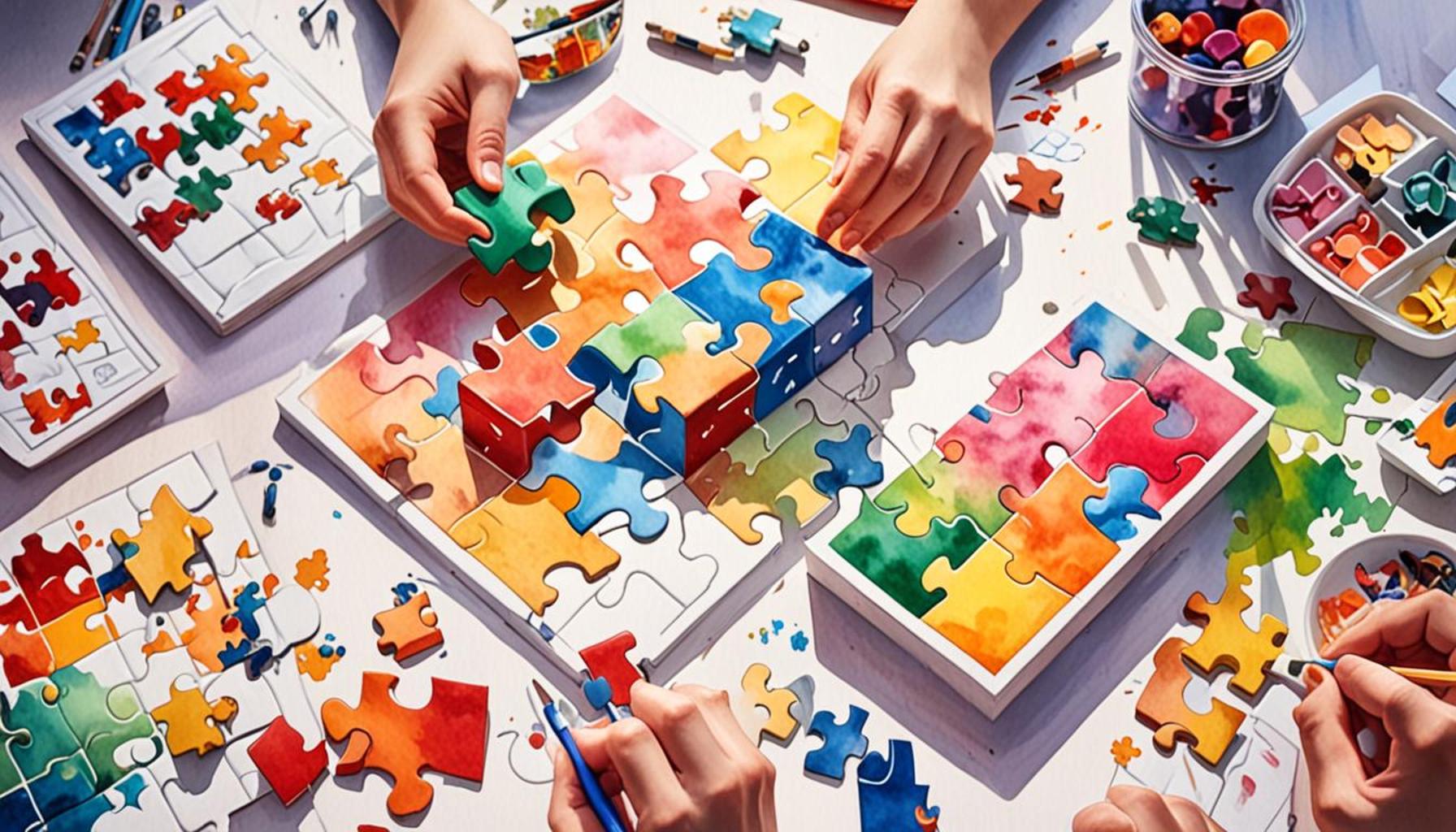
- Improved memory retention – Engaging with puzzles encourages mental active learning. Studies show that students who regularly engage with memory games or jigsaw puzzles tend to retain information better, aiding subjects from history to science. For example, creating a timeline of historical events through puzzles can help solidify students’ understanding of chronology.
- Increased motivation – Students often find puzzles enjoyable, making learning more appealing. Educational games that incorporate puzzles not only captivate students’ attention but also stimulate their curiosity and engagement with the material. Imagine a classroom where students eagerly tackle math problems framed within a puzzle competition.
Moreover, puzzles promote collaboration and communication among peers. Group activities centered around solving puzzles can:
- Encourage teamwork – When working together to solve complex puzzles, students learn to respect different viewpoints and negotiate solutions. This collaborative spirit is essential in group projects and future workplace scenarios.
- Improve social interaction skills – Solving puzzles in pairs or small groups helps foster friendships and develop communication skills. For instance, in an escape room challenge that requires teamwork, students strengthen their ability to articulate thoughts and ideas clearly.
- Lead to a deeper understanding of complex subjects – As students puzzle through intricate concepts, they often see connections they might have initially overlooked. For example, using puzzle pieces to illustrate fractions can provide tangible learning experiences in mathematics.
As educators increasingly recognize the importance of critical thinking, the integration of logic games into classroom settings provides a fertile ground for nurturing these essential skills. Beyond traditional learning methods, innovative approaches involving puzzles can ignite a passion for learning in students. This shift toward incorporating interactive educational tools signifies a move away from rote memorization to a more dynamic understanding of knowledge.
In this article, we will explore the various ways puzzles impact education and their role in shaping a generation of competent thinkers. The potential of puzzles as educational tools is vast, and as we dive deeper into these methodologies, we will uncover the profound effects they can have on students, their learning journeys, and their futures.

DIVE DEEPER: Click here to learn more
Unlocking the Gates of Logical Thinking
The integration of puzzles and logic games into educational settings has become a focal point for promoting critical thinking skills among students. By encouraging students to engage with complex tasks, educators can effectively cultivate intellectual growth in classrooms across the United States. Logic games, in particular, serve as a unique bridge between entertainment and education, turning the learning process into an interactive adventure.
Puzzles prompt students to engage not just their knowledge but also their imagination. This dynamic fosters a more holistic approach to learning as children methodically work through problems, analyze outcomes, and draw conclusions. They tap into a range of cognitive abilities, revealing underlying thought patterns and connections. For example, a chess game not only hones students’ tactical thinking but also nurtures their patience and foresight. Research has shown that such activities can lead to significant improvements in academic performance.
Incorporating Puzzles and Logic Games into curricula creates a multifaceted learning environment where students can:
- Enhance analytical thinking – Logic puzzles challenge students to break down complex scenarios into manageable components. For instance, in math, using a logic grid puzzle allows learners to systematically deduce the solution, reinforcing their analytical skills.
- Encourage persistence – Encountering challenges is a natural part of puzzle-solving. Students learn that failure is often a stepping stone to success, which fosters resilience. This skill is invaluable not only in academics but also in everyday challenges.
- Boost creativity – Puzzles often require innovative thinking. When students encounter an unexpected roadblock, they are pushed to think outside the box, generating unique solutions. For example, a brainteaser that requires lateral thinking prompts students to consider unconventional strategies.
The implications of incorporating puzzles in educational settings extend beyond mere academic performance. They encourage students to develop essential life skills that will serve them long after they leave the classroom. The real-world benefits of puzzle-solving include the ability to think critically and solve problems, necessary competencies for success in modern careers.
Moreover, puzzles create an inclusive atmosphere where students of varying skill levels can participate. For instance, a classroom filled with learners from diverse backgrounds allows them to share different strategies and approaches, enriching the learning experience for everyone. This cultural exchange through puzzles empowers students to appreciate diverse viewpoints while honing their collaborative skills.
As we further explore the impact of puzzles on education, we will delve deeper into various kinds of logic games and how they foster critical thinking. We will also reveal engaging examples from classrooms across the United States, highlighting successful cases and inspiring educators to adopt these innovative teaching methods in their own practices.
While the role of puzzles in education has gained momentum, it’s essential to delve deeper into how these logic games specifically enhance critical thinking skills among students. Research continually supports the notion that engaging in puzzle-solving fosters cognitive development. When students tackle various types of puzzles, they are not simply testing their intelligence; they are developing problem-solving abilities that are crucial for academic success and everyday challenges.
One crucial aspect of puzzle-solving is that it encourages strategic thinking. Each puzzle presents a unique challenge that requires students to analyze the situation, devise a plan, and execute their strategies effectively. As they practice this process, they develop a thoughtful approach to challenges, which is invaluable in both educational settings and life beyond the classroom.
Additionally, puzzles promote collaborative learning. When students work together to solve puzzles, they engage in discussions, share different strategies, and offer perspectives that may be outside their own experiences. This interaction cultivates communication skills and helps students learn to value diverse thought processes, contributing further to their overall cognitive growth.
Moreover, the enjoyment factor cannot be overlooked. Many students find puzzles entertaining, which motivates them to engage more deeply and often. This intrinsic motivation can lead to increased perseverance, encouraging students to push through difficult challenges and reinforcing the idea that struggle is a part of the learning process.
Incorporating puzzles into the educational curriculum can be transformative. Educators may find that integrating different types of logic games not only keeps students engaged but also enhances their analytical thinking capabilities, fostering a generation of learners equipped with essential skills for future success.
| Category 1 | Category 2 |
|---|---|
| Cognitive Development | Enhances problem-solving abilities through engaging and challenging tasks. |
| Collaborative Skills | Encourages teamwork and communication through shared problem-solving experiences. |
Puzzles and logic games are more than just activities; they are tools for developing a student’s ability to think critically and work collaboratively, laying the foundation for lifelong learning and adaptability.
DON’T MISS OUT: Click here to discover how puzzles can boost your child’s skills
Nurturing Collaboration and Social Skills
As students engage with puzzles and logic games, they not only sharpen their individual critical thinking abilities but also enhance their collaboration and social skills. Many of these activities are designed for group participation, which allows students to collaborate on problem-solving tasks, fostering an environment ripe for social interaction. This interactive aspect of puzzle-solving is vital in developing communication skills essential for teamwork.
Consider the classic game of Sudoku. While traditionally a solitary activity, classrooms have adapted it into a collaborative format where students work together to solve a large grid. In this setup, students discuss their thought processes, debate potential solutions, and share strategies, thus enhancing their ability to articulate ideas clearly and listen to others’ perspectives. This is essential, as studies show that teamwork is a top priority for employers in the 21st-century workforce.
Furthermore, puzzles can also promote empathy and leadership skills. When a group of students struggles to approach a challenging puzzle, natural leaders often emerge, guiding discussions and encouraging quieter peers to contribute their thoughts. Such scenarios mirror real-life group dynamics, where understanding group roles is essential for effective collaboration in future workplaces.
Beyond fostering interpersonal connections, logic games have proven benefits for cognitive development through play-based learning. Research demonstrates that when students participate in games that require strategic thinking—such as code-cracking or logic riddles—they stimulate parts of the brain associated with learning, memory, and problem-solving. These games also encourage students to take risks in a safe environment, an experience vital for intellectual and emotional growth.
Moreover, data from various educational studies suggest a significant correlation between puzzle-solving activities and improved mathematical and scientific reasoning. Students engaged in logic-based games showcase increased proficiency in these subjects, as they learn to approach problems methodically and think critically. For example, a middle school classroom implementing logic puzzles has reported an impressive rise in standardized test scores in mathematics, attributing this improvement to enhanced logical reasoning skills sparked by these activities.
- Facilitate diverse learning styles – Puzzles can captivate students with varying modalities. Visual learners may thrive with jigsaw puzzles, while auditory learners might engage better during collaborative board games. These differentiated approaches ensure that each student’s unique learning style is acknowledged and catered to, ultimately benefiting their critical thinking capacity.
- Promote metacognitive skills – Engaging with puzzles encourages students to reflect on their thinking process. After solving a challenge, learners can evaluate what strategies were effective and which were not, promoting a deeper understanding of their learning methods. This self-awareness enhances students’ abilities to approach future daunting tasks with confidence.
In practices across the United States, forward-thinking educators are integrating puzzles and logic games across diverse subjects, transforming the educational landscape into a vibrant tapestry of interactive learning. Case studies from classrooms in Illinois to California demonstrate that when students face real-world problems through the lens of logical puzzles, they develop a keen ability to analyze, synthesize, and evaluate information critically. These educational transformations highlight the importance of puzzles in shaping the skilled thinkers of tomorrow.
DISCOVER MORE: Click here to enhance your collaboration strategies
Conclusion: The Transformative Power of Puzzles in Education
In summary, the integration of puzzles and logic games into educational settings is not merely a trend; it represents a profound shift towards enhancing student learning and critical thinking skills. As explored throughout this article, these engaging activities promote collaboration, stimulate cognitive development, and cater to diverse learning styles, enriching the overall educational experience. With evidence pointing to significant improvements in mathematical and scientific reasoning as a result of structured puzzle-solving, it becomes increasingly clear that fostering critical thinking through play is not only beneficial but essential for preparing students for the complexities of the modern world.
As educators in the United States continue to redefine traditional teaching methodologies, the embrace of puzzles as a learning tool could signal a new era in education. By sharpening analytical competencies and promoting social skills, logic games create a holistic framework for learning that blends fun with intellectual rigor. Furthermore, the promotion of metacognitive skills, which encourages students to reflect on their thought processes, empowers them to approach challenges with renewed confidence.
Looking ahead, educators and policymakers are encouraged to explore the potential of puzzles further, investing in resources that enable accessible, game-based learning across diverse classrooms. The commitment to integrate these powerful tools paves the way for students to emerge as proficient problem solvers and capable thinkers, ready to tackle the challenges of an ever-evolving global landscape. In doing so, we not only enrich our students’ educational journeys but also contribute to cultivating the innovative minds that will shape our future.