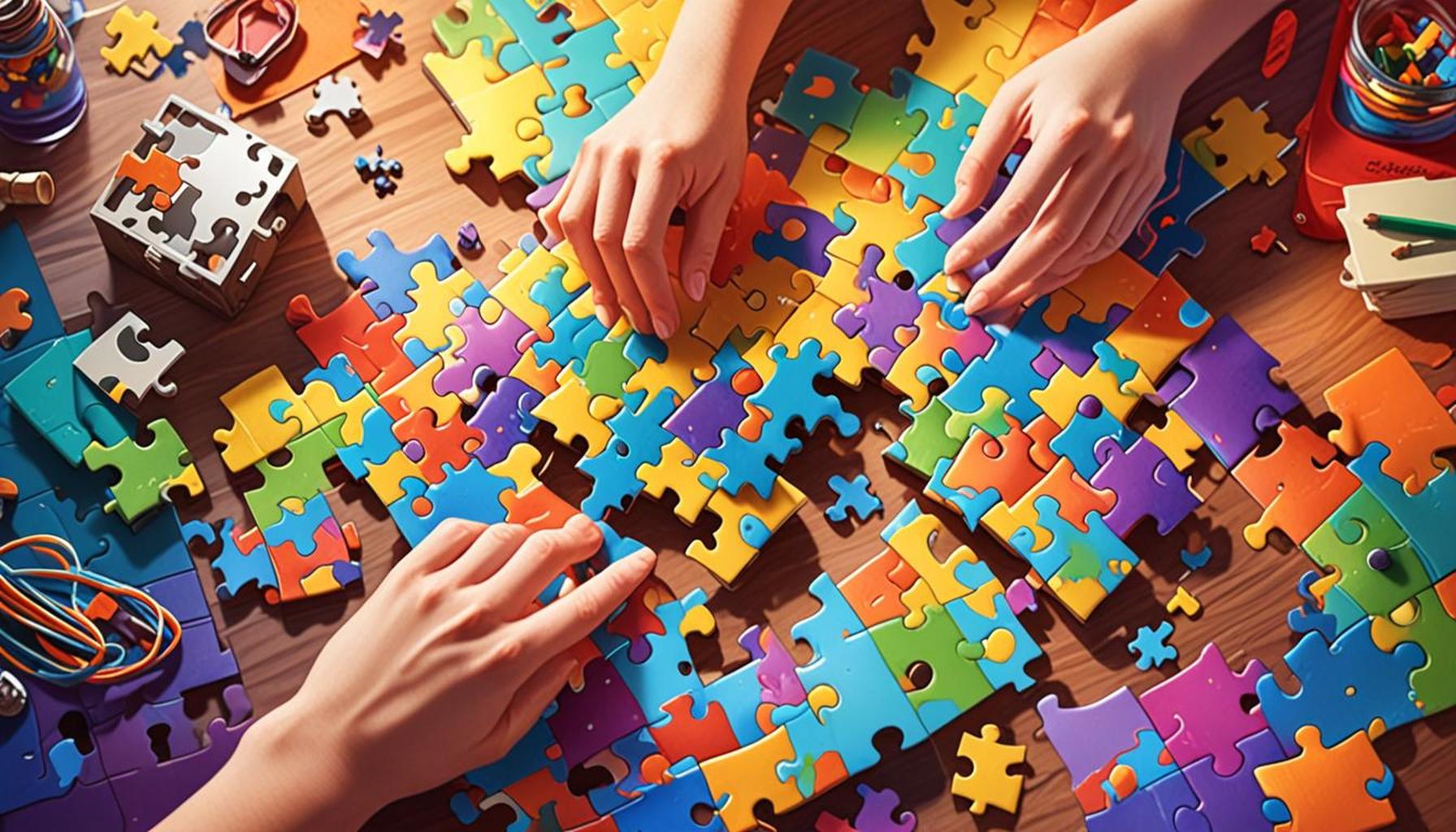
Boost Puzzle Skills Use Critical Thinking Techniques Effectively
Unlocking the Power of Critical Thinking in Puzzles
Puzzles and mind games are more than just pastimes; they are avenues for sharpening our cognitive abilities. By incorporating critical thinking techniques into our approach to solving these challenges, we can enhance our performance significantly. Whether you are an amateur enthusiast or a seasoned puzzler, leveraging these strategies can take your skills to the next level.
Why Critical Thinking Matters
- Enhanced problem-solving: Critical thinking allows for a structured analysis of complex puzzles.
- Boosted creativity: This approach encourages lateral thinking, leading to innovative solutions.
- Increased perseverance: Understanding your thought process can help you overcome challenging obstacles.
In this article, we will explore the top 5 critical thinking techniques that can dramatically improve your puzzle-solving capabilities. Prepare to delve deep into the mechanics of your mind and discover how to apply these strategies effectively.
DISCOVER MORE: Click here to unlock the secrets of brain teasers
Top 5 Techniques to Utilize Critical Thinking Skills to Improve Your Puzzle Performance
Puzzles and mind games have long enchanted individuals across the globe, offering both stimulating entertainment and rigorous mental challenges. Whether it’s the ancient allure of chess or the modern fascination with Sudoku, puzzles require a unique blend of creativity and logic. Yet, beneath the surface lies a subtle power—the application of critical thinking techniques—that can transform a casual enthusiast into a seasoned solver.
Critical thinking is the process of actively analyzing, interpreting, and evaluating information in a structured and disciplined manner. This form of thinking is not just crucial for academic pursuits but is also immensely beneficial for improving puzzle performance. By integrating these skills into your approach, you can streamline problem-solving strategies and significantly enhance your success rate. Below, we delve into the top five techniques to boost your puzzle-solving prowess through critical thinking.

5. Break Down the Problem
The journey of a thousand solutions begins with a single step: breaking down the problem. Decomposition, as this technique is also known, involves splitting a complex puzzle into smaller, more manageable parts. This approach reduces cognitive load and makes it easier to pinpoint errors or opportunities.
Consider a chessboard swarming with potential moves. Instead of contemplating the entire board at once, focus on individual pieces or sections. Likewise, in Sudoku, tackle one row, column, or box at a time, identifying which numbers are missing, and using process of elimination to fill gaps effectively. This meticulous focus on smaller segments culminates in a cohesive pathway to the solution.
4. Look for Patterns
The world is orchestrated by patterns, and puzzles are no different. One of the most effective critical thinking techniques is to look for patterns and recurring sequences. Recognizing these can significantly improve strategic planning and foresight during gameplay.
- Chess: Imagine you’re facing an opponent who favors aggressive opening moves. By identifying this pattern, you can craft a defense strategy that neutralizes their advantage.
- Sudoku: Detect rows and columns with repeated numbers, allowing you to fill in other gaps more confidently.
- Crossword puzzles: Recognize common linguistic structures or frequently recreated word connections to expedite solving.
This honed skill not only makes you a keener observer but also fosters a compartmentalized approach to puzzles, allowing anticipation and strategic maneuvering.
3. Ask Questions
Critical thinking’s backbone is curiosity steered by inquiry. By incorporating the habit of asking questions into puzzle-solving, you ignite a deeper exploration of the task at hand, often unveiling insights otherwise overlooked.
Here are some guiding questions to enhance your approach:
- What is the final objective in solving this puzzle?
- Have I noted all potential clues or overlooked critical information?
- Am I adhering to any assumptions—are they warranted?
These questions aren’t mere pro forma steps; they’re tools for unraveling complexity and embracing possibilities. By questioning, you engage more deeply with each challenge, ultimately fostering innovative problem-solving solutions.
2. Practice Reverse Engineering
Reverse engineering, a staple in fields like software development, is also an invaluable tool for puzzle enthusiasts. This technique involves working backward from the desired end state to understand the puzzle’s composition and potential solutions.
Imagine you’re encountering a cryptic crossword or complex escape room scenario. Begin by visualizing how pieces fit together to reach the evident climax or solution. By untangling these convolutions backward, you unlock fresh perspectives and insights, potentially transforming obstacles into gateways.
1. Engage in Regular Practice
While techniques and strategies are essential, consistent engagement in regular practice is paramount. It’s the single, most effective way to sharpen critical thinking skills and improve overall puzzle performance.
Dive into a variety of puzzles to maintain mental acuity:
- Engage with different logic puzzles to enhance reasoning.
- Challenge yourself with mathematical riddles to boost calculation speed and accuracy.
- Play word games like Scrabble or Boggle for vocabulary enrichment.
- Strategize in intellectual battles such as chess or Go.
Set aside daily practice time, even if brief, to cultivate these mind-flexing activities. The routine not only fortifies existing strategies but also encourages the development of novel problem-solving techniques, making you a robust critical thinker.
Incorporating these five critical thinking techniques into your puzzle-solving rituals promises not just enhanced performance but also the development of a sharper, more analytical mindset. This analytical prowess, honed in the art of puzzles, carries over into various life areas, proving indispensable both personally and professionally.
| Category | Details |
|---|---|
| Critical Analysis | Engaging in critical analysis allows individuals to breakdown puzzle components, leading to an enhanced understanding of the puzzle structure, ultimately aiding in quicker resolutions. |
| Pattern Recognition | Identifying and utilizing patterns in the pieces helps predict where certain pieces might fit, thereby saving time and boosting problem-solving efficiency. |
| Solution Verification | Employing techniques of solution verification encourages double-checking placements against the overall image, which decreases the chances of making errors and enhances precision. |
| Creative Thinking | Cultivating creative thinking inspires novel approaches for placing difficult pieces, guiding individuals beyond conventional methods to achieve success in complex puzzles. |
DISCOVER MORE: Click here to dive deeper
Frequently Asked Questions About Enhancing Puzzle Performance with Critical Thinking
What is critical thinking, and how does it apply to solving puzzles?
Critical thinking involves the objective analysis and evaluation of an issue in order to form a judgment. When applied to puzzles, it means systematically examining clues, considering various angles, and making informed decisions. By fostering a mindset that questions assumptions and evaluates evidence, critical thinkers can approach puzzles with a fresh perspective, often leading to more effective problem-solving strategies.
Are there specific critical thinking techniques that are particularly useful for puzzle-solving?
Yes, several techniques can be quite beneficial. For example, analytical reasoning helps in breaking down puzzles into smaller, manageable parts. Pattern recognition allows solvers to identify recurring themes or elements, crucial in puzzles like Sudoku or crosswords. The technique of deductive reasoning aids in determining what must be true or false based on the provided clues, significantly narrowing down possibilities.
How can improving my critical thinking skills benefit me beyond puzzle-solving?
Enhancing your critical thinking skills offers broad advantages beyond the realm of puzzles. It cultivates a mindset that is analytical, objective, and open to new possibilities, qualities that are valuable in academic settings, the workplace, and in daily decision-making. By developing these skills, you are better prepared to handle challenges, communicate more effectively, and create innovative solutions in diverse aspects of life.
Can practicing puzzles regularly actually improve my critical thinking skills?
Engaging in regular puzzle-solving activities can indeed sharpen critical thinking skills. As you analyze and solve puzzles, your brain becomes accustomed to applying logical reasoning and pattern recognition, skills that are transferable to real-life situations. Over time, this persistent practice can lead to improved cognitive functions such as memory and concentration, making you a more effective thinker.
What are some resources to further develop my critical thinking abilities for better puzzle performance?
To enhance your critical thinking capabilities, consider exploring books and online courses focused on logic and reasoning. Engaging in varied puzzles like crosswords, logic puzzles, and riddles also diversifies your problem-solving approaches. Additionally, joining puzzle community forums and participating in discussions can expose you to new techniques and insights, fostering a deeper understanding of both puzzles and critical thinking strategies.
DISCOVER MORE: Click here for quick tips
Conclusion
Incorporating critical thinking techniques into your puzzle solving routine can significantly enhance your performance. Through this article, we’ve explored a variety of strategies that help not only in navigating the complexities of puzzles but also in nurturing a more agile and analytical mind. Critical thinking offers a systematic approach to tackling challenges, encouraging you to question assumptions, analyze situations from multiple perspectives, and make well-informed decisions.
Key Takeaways
First and foremost, embracing a mindset of curiosity and open-mindedness allows for creative problem-solving, crucial when dealing with intricate puzzles. By advancing your observational skills, you can identify patterns and connections that might otherwise go unnoticed. Additionally, developing the habit of breaking down complex issues into smaller, more manageable parts helps in systematically addressing each element of the puzzle.
Moreover, enhancing your logical reasoning empowers you to evaluate solutions critically and construct arguments that are coherent and valid. This in turn supports improved decision-making processes. Additionally, honing your ability to distinguish between relevant and irrelevant information allows for a more focused and effective approach to puzzle-solving.
Ultimately, these techniques are invaluable beyond the realm of mind games, as they cultivate skills that are applicable in various aspects of life. By continually refining your critical thinking abilities, you equip yourself with tools that not only boost your performance in puzzles but also enrich your personal growth and intellectual capability. The investment in developing these skills is undoubtedly worthwhile, offering a myriad of practical benefits and an enhanced appreciation for the art of problem-solving. Explore these methods further, and you might just find yourself mastering not only puzzles but also the intricacies of everyday challenges.