Cognitive Challenges and Neuroscience: What Happens in the Brain During Puzzle Solving
Understanding the Intricacies of Brain Function During Puzzle Solving
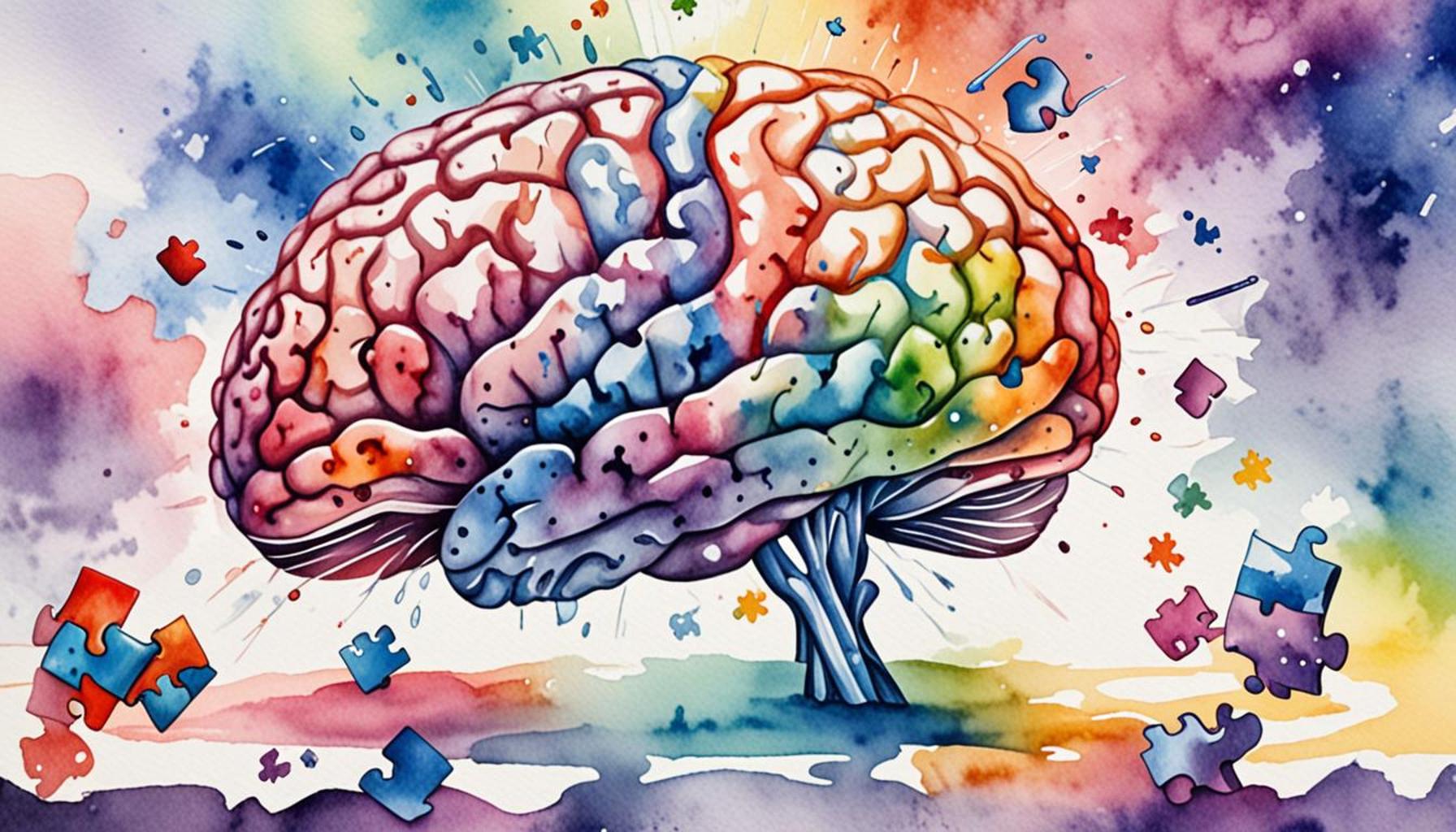
Every time we engage in puzzle solving, our brains are set into action, navigating complex networks and pathways. This seemingly simple task unleashes a flurry of cognitive activities, revealing how our minds function during moments of challenge. Understanding these processes not only satiates our curiosity but also highlights the intricate relationship between neuroscience and cognitive challenges. With puzzles ranging from crosswords to Sudoku and even jigsaw puzzles, each type offers a unique opportunity for cognitive engagement.
What Happens in the Brain?
When tackling puzzles, several key brain areas are activated, each contributing a unique function to the overall problem-solving process:
- Prefrontal Cortex: This area of the brain is critically involved in higher-order functions such as problem-solving, decision-making, and planning. For instance, as we attempt to figure out a complex crossword clue, the prefrontal cortex helps us weigh different possibilities based on our vocabulary and prior knowledge.
- Parietal Lobe: Essential for spatial awareness and reasoning, the parietal lobe plays an integral role when working on spatial puzzles like jigsaw puzzles. It helps in visualizing how pieces fit together and in navigating through dimensions.
- Hippocampus: Functioning as a hub for memory, the hippocampus aids in retrieving past experiences and knowledge that can inform our current puzzle-solving strategies. When we recall a similar puzzle we solved previously, the hippocampus activates, allowing us to use that stored information.
These brain regions cooperate seamlessly, enhancing our cognitive abilities through various interconnected processes:
- Critical thinking: This involves formulating strategies to overcome obstacles within a puzzle. Whether it’s deducing the missing word in a crossword or figuring out the next best move in a logic puzzle, critical thinking allows us to navigate challenges effectively.
- Memory usage: Engaging with puzzles requires drawing on past experiences to find solutions. For example, when someone encounters a challenging Sudoku grid, they often remember techniques from previous grids to apply successfully in the current one.
- Pattern recognition: Identifying similarities and differences enables us to deduce answers. In a jigsaw puzzle, recognizing the color gradients or edge types can significantly speed up the assembly of pieces.
Research supports the notion that regularly engaging in puzzles not only improves our brain function but also serves as a fun and stimulating way to boost overall cognitive health. For instance, studies show that older adults who participate in puzzle-solving activities tend to experience slower rates of cognitive decline compared to their non-puzzling counterparts.
As we delve deeper into this fascinating subject, we uncover the profound impacts of puzzle solving on mental agility and the significance of neuroscience in understanding these dynamics. By exploring how our brains respond to these challenges, we not only learn about the importance of cognitive resilience but also appreciate the value of brain-engaging activities in our daily lives.
DISCOVER MORE: Click here for insights on collaboration strategies
Unraveling Neural Pathways During Puzzle Engagement
As our brains tackle puzzles, they spring into action, demonstrating an intricate dance of neurological processes. Each puzzle presents a unique set of challenges that not only engages our cognitive abilities but also prompts a remarkable interplay between different regions of the brain. Understanding these dynamics reveals the significant impact puzzle solving has on mental agility, learning, and overall brain function.
The Brain’s Response to Cognitive Challenges
When we immerse ourselves in solving puzzles, various cognitive functions are set in motion, facilitating problem-solving and decision-making. Research indicates that the brain leverages a network of interconnected regions to deliver a comprehensive response to these challenges:
- Temporoparietal Junction: This area is vital for processing language and enhances our ability to derive meaning from clues and instructions in word puzzles and riddles. As we search through potential answers, this area aids in deciphering language structures and context.
- Anterior Cingulate Cortex: Often regarded as a conflict-monitoring region, the anterior cingulate cortex becomes activated when we encounter obstacles or dead ends in puzzle solving. It plays a crucial role in adjusting our strategies to continue making progress, ultimately driving perseverance through complex challenges.
- Basal Ganglia: Involved in habit formation and procedural learning, the basal ganglia assist in refining our techniques while tackling puzzles. As we engage with similar puzzles over time, this area aids in developing efficient strategies that become second nature, allowing for quicker solutions in future attempts.
The seamless collaboration of these brain regions enriches our cognitive experience through several interconnected processes:
- Analytical reasoning: The need to examine clues and deduce answers engages analytical reasoning skills. Whether forming connections in a logic puzzle or discerning patterns in a Sudoku grid, this type of reasoning sharpens our judgment and boosts cognitive acuity.
- Memory reinforcement: Each engagement with puzzles creates pathways that enhance our memory. For instance, encountering recurring themes in crossword puzzles can activate a network of related words, solidifying our vocabulary and recall abilities.
- Emotional response: The sense of joy and satisfaction derived from solving a puzzle triggers the release of dopamine, a neurotransmitter associated with reward and motivation. This connection between emotional response and cognitive task enhances our overall enjoyment and encourages continued engagement in mentally stimulating activities.
Studies consistently show that people who engage in puzzle-solving activities experience notable cognitive benefits, including improved memory retention, enhanced critical thinking skills, and increased focus. These findings extend beyond mere entertainment; they highlight the profound relationship between neuroscience and cognitive challenges, suggesting that regularly tackling puzzles can lead to a healthier brain as we age.
As we further explore the cognitive processes underlying puzzle solving, we uncover a world teeming with potential. The dynamics of how our brains respond to these challenges illuminate the importance of keeping our minds active, enhancing not only our ability to solve puzzles but also our overall cognitive resilience throughout life.
| Category | Details |
|---|---|
| Cognitive Engagement | Puzzles stimulate multiple brain regions, enhancing problem-solving skills. |
| Mental Flexibility | Solving puzzles promotes adaptability and creative thinking. |
| Memory Recall | Working with puzzles helps improve short-term and long-term memory. |
| Stress Reduction | Engaging in puzzle-solving can lower stress levels and promote relaxation. |
Engaging with puzzles is not just a leisurely activity; it is an invitation to delve into the complex workings of the human brain. The act of solving these cognitive challenges triggers a symphony of neural responses that enhance cognitive functioning. Research has shown that the brain becomes a bustling hub of activity, flooding different regions with heightened cerebral engagement. Each twist and turn of a puzzle requires not only analytical skills but also taps into emotional and executive functions, fostering a multifaceted approach to problem-solving that strengthens neural connections over time.The incorporation of puzzles into daily routines is recommended not just for entertainment but as a means to boost mental agility. As individuals tackle these tasks, they are developing skills that transcend the game—skills that can improve decision-making capabilities, mental resilience, and even emotional well-being through consistent practice. Thus, understanding what occurs in the brain during these moments of challenge is pivotal, not only in enhancing personal enjoyment but in paving the way for cognitive advancements that affect overall quality of life.
DIVE DEEPER: Click here to enhance your skills
Engagement and Neuroplasticity: The Lasting Effects of Puzzle Solving
Delving deeper into the realm of neuroscience and puzzle-solving reveals another crucial aspect: the concept of neuroplasticity. Neuroplasticity is the brain’s remarkable ability to physically change and adapt in response to learning and experience. Engaging in cognitively demanding tasks, such as puzzle-solving, significantly contributes to this process, thereby sculpting our neural pathways and enhancing mental agility over time.
The Role of Neuroplasticity in Cognitive Development
Research shows that regularly engaging in puzzles catalyzes the brain’s neuroplastic capabilities. The more we challenge ourselves, the more our brains are equipped to handle complex tasks. Neuroimaging studies have illustrated that individuals who frequently engage in cognitively demanding activities exhibit increased grey matter density in areas of the brain linked to reasoning and problem solving.
- Enhanced Problem-Solving Skills: When someone repeatedly tackles puzzles, the brain fosters synaptic connections that sharpen problem-solving capabilities. Over time, this leads to improved proficiency not only in puzzles but also in real-life scenarios requiring analytical thinking. This is particularly evident in fields like science, technology, engineering, and mathematics (STEM), where problem-solving is fundamental.
- Age-Related Cognitive Decline: Engaging with puzzles does not just sharpen the mind; it serves as a protective factor against the cognitive decline associated with aging. Studies suggest that older adults who regularly solve puzzles experience a slower rate of memory deterioration. This phenomenon is likely due to the increased neural connectivity developed through engaging in mentally stimulating activities.
Cognitive Benefits Beyond the Puzzle
The benefits of puzzle-solving extend beyond the completion of a single challenge, influencing various facets of cognitive function. It has been observed that individuals who frequently engage in puzzles enhance their executive functions, which encompass skills like working memory, flexible thinking, and self-control.
- Working Memory Improvement: Solving puzzles requires active engagement of working memory, which is fundamental for holding and manipulating information in real-time. Regular practice can significantly increase one’s working memory capacity, impacting tasks requiring quick decision-making and effective planning.
- Stress Reduction: Immersing oneself in a puzzle can also lead to stress relief. The act of concentrating on a puzzle can distract the mind from daily worries, promoting a sense of calm. Furthermore, engaging in such cognitive tasks elevates mood by releasing endorphins, reinforcing the connection between cognitive challenges and emotional well-being.
With the advancement of technology, puzzle-solving has found new pathways through various applications and online platforms, making cognitive challenges more accessible than ever. Gamification in apps enhances engagement, providing users with personalized feedback on their progress while introducing new puzzles tailored to their skill levels. This digital evolution presents exciting avenues to nurture and leverage neuroplasticity further.
The intertwining of neuroscience and cognitive challenges illustrates the profound benefits of puzzle-solving. Engaging in these activities fosters not just immediate cognitive responses but also long-term growth in brain function and resilience, emphasizing the value of maintaining mental fitness at any age.
DISCOVER MORE: Click here to enhance your logical skills
Conclusion: The Intricate Dance Between Puzzles and Neurodevelopment
As we probe into the intricacies of cognitive challenges and their profound impact on neuroscience, it becomes increasingly clear that puzzle-solving is more than just a recreational activity; it is a vital exercise for our brains. The engagement in puzzles enhances our neuroplasticity, reinvigorating synaptic pathways essential for advanced problem-solving and critical thinking. The longitudinal effects of regularly engaging with puzzles are both compelling and encouraging, revealing potential avenues for enhancing cognitive resilience as we age.
Moreover, the cognitive benefits extend far beyond sharp analytical skills. By bolstering working memory, improving executive functions, and even reducing stress levels, puzzle-solving contributes to emotional well-being and mental clarity. These intertwined benefits emphasize the need for integrating cognitive challenges into our daily routines, enriching our lives while safeguarding our cognitive health.
With advancements in technology opening new horizons for puzzle-solving through engaging applications, there has never been a more accessible time to embrace these mental workouts. From virtual escape rooms to brain-training games, the potential to stimulate our minds is at our fingertips. As we continue to uncover the mysteries within our brains, puzzle-solving emerges as a fascinating intersection of challenge and growth, urging us all to cultivate a lifelong habit of mental fitness.
In conclusion, the exploration of cognitive challenges against the backdrop of neuroscience reveals intriguing insights, inviting readers to embark on their journey toward cognitive enhancement. By embracing these activities, we not only sharpen our minds but also honor the extraordinary adaptability of the human brain.