
The effectiveness of puzzles in developing cognitive skills in children
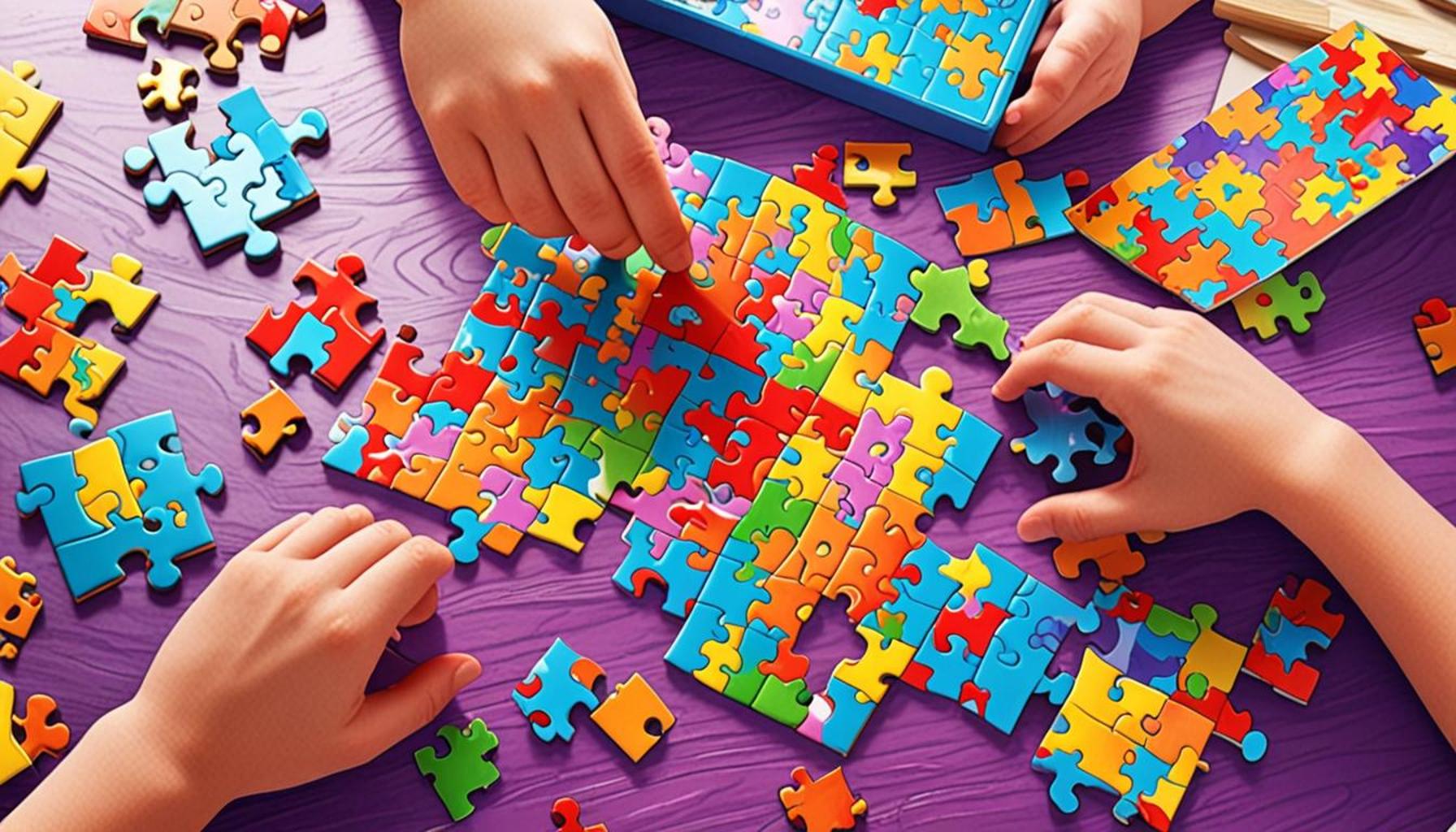
The Positive Impact of Puzzles on Cognitive Development
Puzzles serve as more than merely entertaining activities for children—they are vital instruments for fostering significant cognitive skill development. Engaging with puzzles allows children to simultaneously enjoy themselves while cultivating essential mental capabilities that are crucial for overcoming challenges in their daily lives. Numerous studies have illuminated the connection between puzzle-solving and cognitive enhancements, showcasing how these simple tasks can generate profound benefits in child development.
Consider the wide array of cognitive skills that can be significantly boosted through this enriching activity:
- Problem-Solving Skills: Puzzles inherently challenge children by presenting them with obstacles that require critical thinking and innovative solutions. For instance, when faced with a jigsaw puzzle missing a piece, a child must evaluate various options regarding the shape and color to find the correct fit.
- Spatial Awareness: The act of manipulating puzzle pieces allows kids to grasp the spatial relationships between different shapes. For example, when completing a puzzle of the United States map, children learn about geographical locations and the spatial arrangement of states.
- Memory Enhancement: Engaging with puzzles requires recalling various shapes, colors, and patterns, significantly improving children’s memory retention abilities. As kids try to remember where a particular piece belongs, they’re honing their working memory skills, which are essential for academic success.
- Fine Motor Skills: The physical act of assembling pieces promotes fine motor development, as children enhance their hand-eye coordination and dexterity. Activities like fitting pieces together improve their ability to perform everyday tasks such as writing and using utensils.
In our rapidly evolving technological landscape, integrating tactile activities such as puzzles into children’s routines can offer vital developmental advantages. Educational experts underline that cultivating these skills can lay the foundational groundwork for future academic pursuits and real-world problem-solving scenarios.
Puzzles come in various formats—from classic jigsaw puzzles to more complex crosswords and brain teasers—all catering to differing age groups and skill levels. As parents and educators seek effective methods to promote cognitive growth, puzzles emerge as an appealing and versatile option capable of engaging young minds.
Furthermore, the social aspect of puzzles should not be overlooked. Solving puzzles can be a collaborative experience, encouraging teamwork and communication among peers or family members. This peer interaction not only enhances the enjoyment but also reinforces social skills—factors that play a significant role in holistic development.
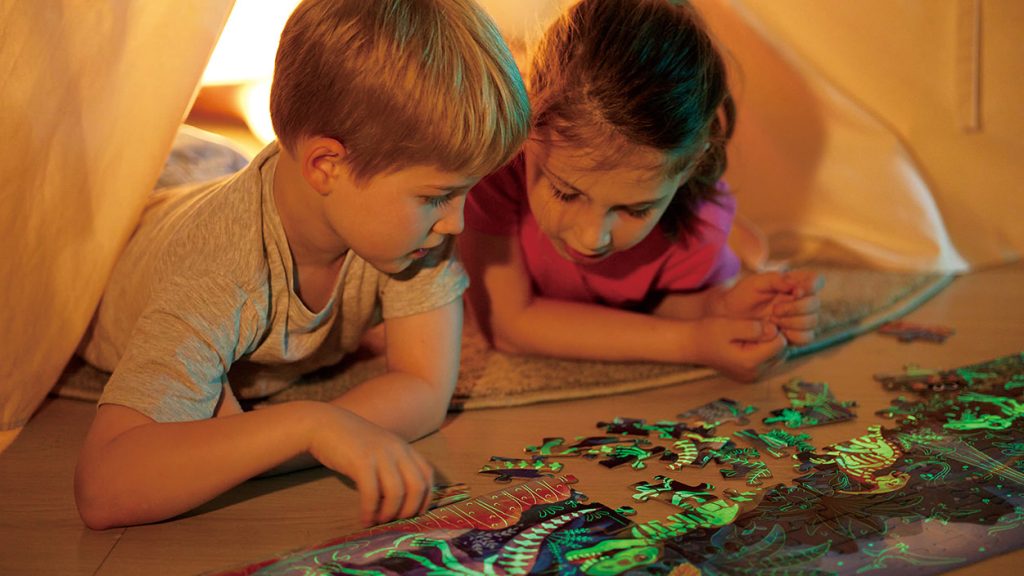
Join us in exploring the fascinating impact of puzzles on cognitive development, as they equip the younger generation with essential skills that extend beyond the realm of fun. The journey through each piece is not just about reaching the end; it’s about unlocking the potential within every child.
DISCOVER: Click here to sharpen your mind
Unlocking Cognitive Skills Through Puzzle Play
Puzzles are not just a source of entertainment; they are powerful tools that play a crucial role in the cognitive development of children. By engaging with puzzles, children are not only having fun but also developing a range of cognitive skills that are critical for their future learning and everyday problem-solving. Research supports the notion that incorporating puzzles into playtime can lead to lasting enhancements in various cognitive areas.
One of the most significant skills that puzzles help improve is problem-solving ability. As children work through different types of puzzles, they are faced with numerous challenges that require thoughtful consideration. For instance, assembling a simple jigsaw puzzle requires a child to assess each piece and determine its rightful place based on shape, color, and pattern. This process encourages children to think critically and develop logical reasoning skills, setting the stage for academic success in subjects like math and science, where problem-solving is essential.
Moreover, puzzles greatly contribute to the development of spatial awareness. When children manipulate and rotate puzzle pieces, they become more adept at understanding the relationships between different shapes. This skill is further exemplified when children engage with three-dimensional puzzles or puzzles depicting various geographical layouts. By piecing together a national map, they can better comprehend spatial relationships, which is a foundational component of geography and science learning.
In addition to enhancing problem-solving and spatial awareness, puzzles significantly boost memory skills. The act of recalling specific pieces, colors, and patterns is a mental exercise that strengthens a child’s working memory. According to studies, children who regularly engage in puzzles can retain information better, helping them to excel in school activities and other cognitive tasks. Engaging with puzzles can provide children with an experiential learning opportunity, bolstering their concentration and focus.
Furthermore, the physical act of piecing together puzzles aids in developing fine motor skills. The dexterity required to grasp small pieces and fit them together enhances hand-eye coordination and manual dexterity. These physical skills are vital for children as they transition into more complex tasks requiring fine motor control, such as writing and other creative activities.
Interestingly, puzzles encompass a variety of forms, from traditional jigsaw puzzles to word searches and logic puzzles, catering to various interests and age groups. This flexibility makes puzzles an effective and engaging option for children at different developmental stages. As parents and educators strive to encourage cognitive growth, integrating puzzles into learning routines presents a promising and enjoyable strategy.
Moreover, puzzles can foster strong social bonds when completed in a group setting. Collaborative puzzle play promotes communication and teamwork among peers or family members. This interactive dimension of puzzle-solving not only heightens the overall enjoyment but also cultivates essential social skills that contribute to the well-rounded development of children.
As we delve deeper into the multifaceted benefits of puzzles, it becomes increasingly evident that they are invaluable tools in nurturing the cognitive skills necessary for children to thrive in both academic and social environments.
The Effectiveness of Puzzles in Developing Cognitive Skills in Children
Puzzles serve a significant role in fostering cognitive development in children, providing not only entertainment but also valuable learning experiences. One of the key aspects of puzzles is their ability to enhance problem-solving skills. As children encounter various challenges in solving puzzles, they learn to think critically and devise strategies to overcome obstacles. This process of trial and error promotes creative thinking and builds resilience as they learn that not all problems have immediate solutions.Additionally, puzzles can improve memory and concentration. Many puzzles require children to remember where pieces fit and the overall picture they are trying to create. This repetitive practice develops their working memory and keeps them engaged, which is crucial for their attentional skills. Research indicates that children engaged in puzzle play show enhanced spatial reasoning abilities, which are vital for subjects such as math and science.Moreover, the social aspect of puzzle-solving should not be overlooked. When children work together on puzzles, they develop collaboration skills and learn to communicate effectively. These interactions foster a sense of community and shared accomplishment, enriching their social skills and emotional intelligence.Complementing these benefits, puzzles are well-regarded for their adaptability to different age groups and skill levels, making them an accessible tool for cognitive development. With each completed puzzle, children gain not just a sense of achievement but also a deeper understanding of the world around them, making it clear that puzzles are much more than simple pastimes.
| Category | Benefits |
|---|---|
| Problem-solving Skills | Enhances critical thinking and strategy development |
| Memory and Focus | Improves working memory and concentration |
Recognizing the multifaceted benefits of puzzles can pave the way for parents and educators to incorporate them more strategically in children’s everyday activities, enhancing their cognitive development effectively.
DISCOVER MORE: Click here to dive deeper
Puzzles as Catalysts for Language and Emotional Development
While the cognitive benefits of puzzles are significant, they also offer substantial advantages in language development and emotional growth, further underscoring their effectiveness as educational tools. When children engage in puzzle-solving, particularly in collaborative settings, they often communicate their thoughts and strategies aloud. This dialogue not only enhances their vocabulary but also cultivates critical language skills, as they describe their reasoning, negotiate ideas, or share excitement over a piece fitting into place. Research indicates that interactive play, such as puzzles, can lead to a marked improvement in verbal proficiency, crucial for literacy and overall academic achievement.
Puzzles also serve as an excellent medium for children to express their emotions and develop social skills. As they tackle challenging puzzles, children may encounter frustration or anxiety when a piece does not fit as expected. Learning to navigate these feelings while engaged in play teaches resilience and patience, valuable traits for future interpersonal and academic challenges. Further, cooperative puzzle activities foster a sense of teamwork, building social connections and encouraging children to celebrate collective achievements. This social aspect of puzzle play can lead to a deeper understanding of empathy, as kids learn to support their peers through difficult tasks.
In addition to fostering emotional intelligence, puzzles also enhance critical thinking skills. When children approach a puzzle, they often need to conceptualize different solutions and anticipate problems. This experience can lead to improved analytical skills that extend beyond puzzles to other areas of learning. For example, research shows that students who have regularly engaged in puzzle-solving display superior reasoning abilities in mathematics and logical reasoning tests due to their experience in recognizing patterns and applying strategies effectively.
Puzzles can even serve as a springboard for integrating STEM education into play. By introducing puzzles that explore scientific concepts or mathematical challenges, educators and parents can cultivate a child’s interest in these subjects early on. A simple puzzle that teaches fractions, for instance, can demystify mathematics in a hands-on and engaging manner. Similarly, puzzles that incorporate elements of engineering, such as building structures with connecting pieces, encourage children to think creatively and critically, laying the groundwork for future STEM pursuits.
The diversity of puzzle types available also plays a crucial role in their effectiveness. From traditional jigsaw puzzles to more complex mechanical puzzles and even digital apps designed to engage young minds, each variety offers unique opportunities for challenge and learning. The incorporation of technology, in particular, has opened new doors; interactive puzzle apps can adapt to a child’s learning pace, providing tailored challenges that keep them engaged and motivated.
Moreover, the integration of puzzles into educational settings does not only benefit individual children but can also enhance classroom dynamics. Educators can utilize puzzles as collaborative projects in small groups, promoting communication and collaboration. These settings not only allow children to support one another but also create a community of learners that fosters a positive learning environment. Such cooperation reflects real-world scenarios, preparing children for future academic and workplace collaboration.
In summary, the effectiveness of puzzles in developing cognitive skills in children extends far beyond simple gameplay. Their role in nurturing language, emotional intelligence, critical thinking, and STEM aptitude makes them a multifaceted resource for parents, educators, and anyone invested in supporting the comprehensive growth of children.
DIVE DEEPER: Click here to unlock the secrets of problem-solving
Conclusion: The Enduring Power of Puzzles in Child Development
The effectiveness of puzzles in developing cognitive skills in children is profound and multifaceted. Throughout this exploration, it has become clear that puzzles not only sharpen essential cognitive abilities like problem-solving and critical thinking but also play a significant role in enhancing language development and emotional intelligence. From collaborative discussions that expand vocabulary to moments of triumph that build resilience, the journey of putting together a puzzle offers rich learning experiences.
A notable aspect of puzzle play is its ability to bridge academic and emotional growth, offering children essential tools for future success. The integration of puzzles as part of children’s learning routines—be it at home, in schools, or through technology—invites diverse, engaging ways to cultivate curiosity and foster self-confidence. Importantly, puzzles can also lay the groundwork for an interest in STEM fields, imparting foundational knowledge through innovative and hands-on methods.
With the versatility offered by modern puzzle formats, from traditional to digital apps, there remains an abundance of opportunities for children to engage with challenges suited to their individual learning levels. As we prioritize the holistic development of children, embracing puzzles as effective educational tools appears not only beneficial but essential. The evidence underscores a simple truth: by incorporating puzzles into children’s daily lives, we empower them with cognitive skills that will serve them well throughout their lives, paving the way for lifelong learning and problem-solving competence.