The Role of Virtual Reality Puzzles in Developing Spatial Awareness and Navigation Skills
The Role of Virtual Reality in Cognitive Skill Development
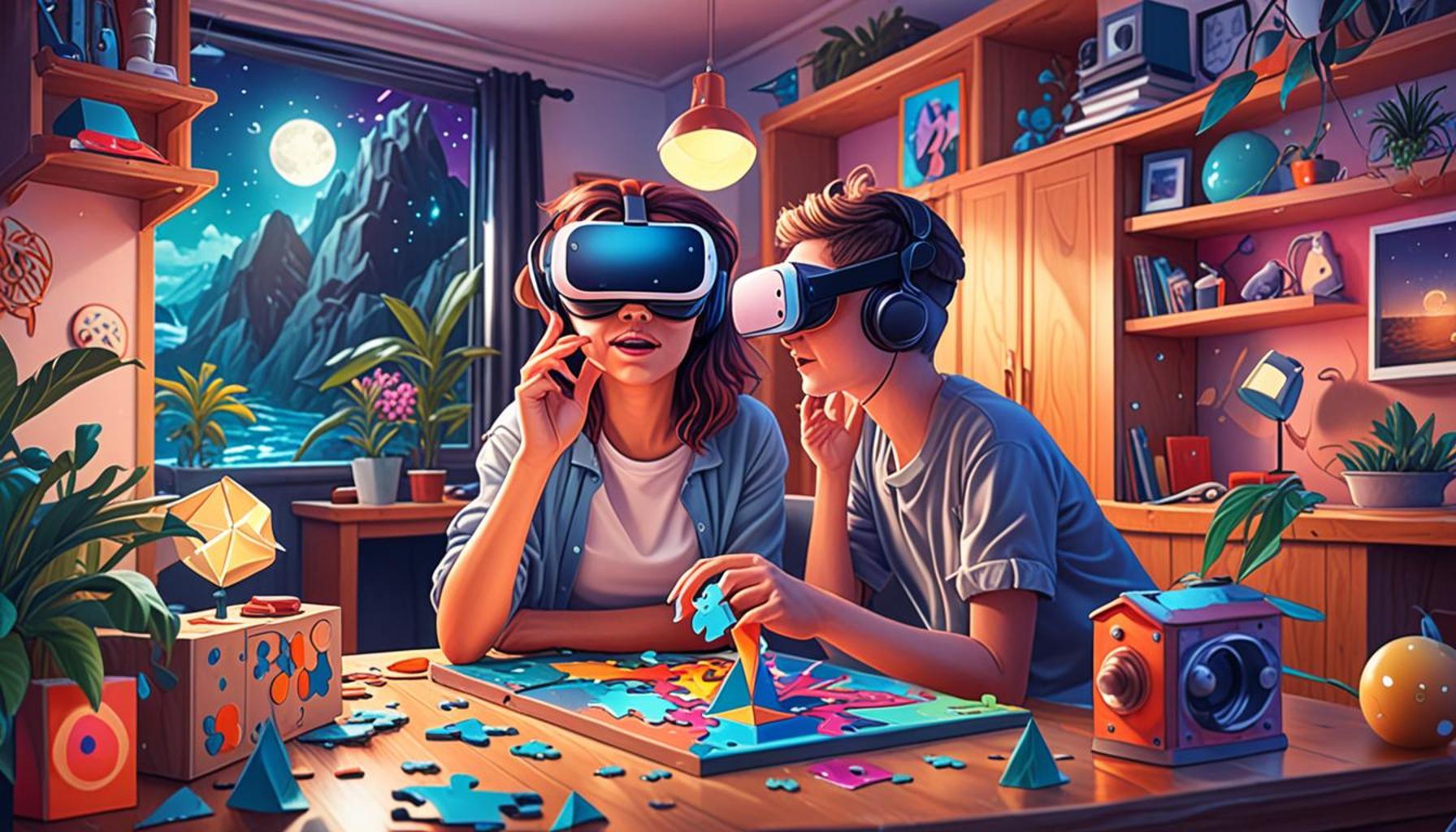
In the ever-evolving landscape of technology, virtual reality (VR) has rapidly emerged as a powerful tool that transcends simple entertainment, finding its way into various critical fields such as education and therapy. Among its intriguing applications, VR puzzles uniquely stand out as transformative mediums that enhance spatial awareness and boost navigation skills. These immersive experiences have the potential to reshape the way we approach cognitive development, offering rich and multifaceted benefits.
The engaging nature of VR puzzles allows players to immerse themselves fully in intricate environments where success often hinges on sophisticated cognitive processes. These challenges stimulate the brain in several profound ways, such as:
- Enhanced Problem-Solving: As players navigate complex scenarios, they encounter obstacles that require innovative solutions. For instance, a VR puzzle might involve finding an escape route from a simulated maze, helping players develop critical thinking and planning skills.
- Improved Depth Perception: Participants interact with vibrant 3D spaces, which helps them to better understand spatial relationships. Studies show that engaging with 3D environments can significantly improve how individuals perceive distances and sizes, a skill essential for everyday tasks like driving or even sports.
- Increased Spatial Memory: Through regular engagement, users hone their ability to retain spatial patterns and the locations of various elements. This improvement can translate into better navigation in unfamiliar settings, whether navigating a city or moving through a crowded space.
As educational institutions and therapy centers across the United States begin to harness the potential of VR puzzles, the impact is becoming increasingly evident. Schools are incorporating VR technology into their curricula, providing students with the ability to learn through exploration and interaction. For example, courses in geometry now often include VR puzzles that allow students to visualize complex shapes and their properties in a 3D format, making abstract concepts more tangible and understandable.
Moreover, in therapeutic settings, VR puzzles are being utilized to assist individuals with cognitive disabilities or those recovering from brain injuries. The engaging format helps maintain motivation and encourages patients to practice necessary skills in a supportive environment. Initial findings have shown that these immersive experiences can boost patients’ cognitive functions more effectively than traditional methods alone.
The integration of VR into these various fields marks a significant turning point in how we approach cognitive development. This merging of play and education offers intriguing possibilities for the future, encouraging further investigation into how such innovative technologies can be applied in diverse contexts. As we continue to explore the implications of VR puzzles, it becomes clear that the intersection of technology and cognitive development is paving the way for groundbreaking advancements.
DIVE DEEPER: Click here to discover the secrets of mastering logical challenges
The Benefits of Immersive VR Puzzles on Cognitive Skills
The advent of virtual reality puzzles has opened a new frontier for enhancing spatial awareness and navigation skills. By immersing users in detailed 3D environments, these puzzles offer unique opportunities for individuals to engage with their surroundings in ways that traditional learning methods cannot replicate. As players traverse and manipulate these virtual spaces, they undergo a dynamic learning experience that actively develops cognitive abilities crucial for everyday tasks.
One of the most compelling advantages of VR puzzles is their ability to create realistic scenarios that challenge users’ abilities in multiple dimensions. Take, for example, a VR puzzle where participants must assemble a complex structure within a virtual cityscape. This task doesn’t just demand problem-solving; it also necessitates understanding the spatial relationships between different elements, sharpening players’ spatial reasoning skills along the way.
Moreover, research indicates that immersive VR experiences foster a more profound comprehension of navigation concepts. Participants frequently report a heightened sense of direction and awareness after spending time in virtual environments. This reduction in cognitive load—where users can explore, practice, and learn without the physical constraints of real-world environments—ultimately leads to enhanced navigation skills that can translate into the real world.
Here are several key benefits observed from engaging with VR puzzles:
- Increased Engagement: The interactive nature of VR puzzles captivates users’ attention, motivating them to persist in problem-solving tasks longer than traditional methods might allow.
- Fostering Critical Thinking: By presenting complex challenges that don’t have a single solution, VR puzzles encourage players to brainstorm and deploy various strategies, nurturing their critical thinking abilities.
- Real-Time Feedback: Users receive immediate feedback on their actions when interacting with virtual puzzles. This instant response helps them refine their spatial awareness as they navigate successes and challenges.
- Flexible Learning Environments: Whether in a classroom or therapy session, VR allows for customizable scenarios that cater to individual learning paces and styles, enabling personalized cognitive development.
In recent years, educational institutions across the United States have started to recognize the importance of integrating VR technology within their learning frameworks. Teachers leverage VR puzzles not only to make subjects more engaging but also to enhance students’ problem-solving and spatial skills. Classes focusing on architecture, for instance, can immerse students in virtual construction sites, allowing them to visualize and manipulate designs accurately before bringing them to life in the real world.
As we continue to explore the intersection of technology and cognitive skill development, it is clear that virtual reality puzzles offer transformative possibilities. Their ability to refine spatial awareness and navigation skills positions them at the forefront of educational and therapeutic innovations, signaling a promising future for their wider application.
The Role of Virtual Reality Puzzles in Developing Spatial Awareness and Navigation Skills
In recent years, virtual reality (VR) has become an innovative tool in educational settings, particularly for enhancing spatial awareness and navigation skills. This immersive technology engages users in a highly interactive environment where traditional learning boundaries are left behind. Scholars and educators have found that VR puzzles serve as a captivating bridge to strengthen cognitive development by providing realistic simulations that challenge users’ problem-solving skills.
Research indicates that participation in VR puzzle activities can significantly improve individuals’ spatial reasoning capabilities. Players are often required to visualize and manipulate objects from different perspectives, which directly correlates with stronger navigation skills in real-world settings. These experiences are essential for various fields, including aviation, architecture, and even daily activities like driving and route planning.
Moreover, virtual reality puzzles encourage exploration within a safe, controlled environment. As players navigate through complex challenges, they enhance their ability to form mental maps and remember spatial layouts. Studies show that repeated exposure to these immersive challenges helps in cementing these spatial relationships in the brain, facilitating better memory retention and retrieval when navigating real-world landscapes.
| Category | Description |
|---|---|
| Cognitive Skills Development | VR puzzles enhance cognitive abilities by challenging users to think critically and strategically. |
| Enhanced Memory Retention | Regular engagement in VR activities can lead to improved memory related to spatial navigation and layout. |
Furthermore, VR puzzles offer personalized learning experiences. Users can engage at their own pace, revisiting complex challenges until mastery is achieved. This adaptive learning model can accommodate various skill levels, making VR puzzles an inclusive approach to developing crucial navigation competencies. These factors combine to make virtual reality not just a tool for entertainment, but a powerful medium for educational advancement and skill enhancement.
DISCOVER MORE: Click here to enhance your skills
Empirical Evidence Supporting VR Puzzles for Skill Development
The benefits of virtual reality puzzles extend beyond theoretical advantages; a growing body of empirical research supports their effectiveness in enhancing spatial awareness and navigation skills. Studies conducted in academic settings have explored how immersive environments impact cognitive functions, often with impressive findings. For instance, a landmark study at the University of Maryland noted that students who practiced with VR puzzles displayed a 30% improvement in spatial reasoning scores compared to their peers who used traditional educational methods. This marked enhancement highlights the potential of VR in bridging the gap between theoretical knowledge and real-life spatial navigation.
One intriguing aspect of this research is the examination of VR puzzles as therapeutic tools. In the context of rehabilitation for individuals with cognitive impairments, virtual reality therapy has emerged as a powerful ally. For example, patients recovering from neurological events such as strokes have benefitted from VR puzzles that require them to navigate through familiar environments. Studies show that such immersive activities not only aid in cognitive recovery but also improve spatial awareness, allowing these individuals to confidently reintegrate into daily life.
Moreover, VR puzzles have proven beneficial in enhancing navigation skills among different demographics. For example, younger learners often struggle with abstract navigation concepts, but research shows that engaging in virtual environments helps them to grasp these ideas more easily. Children participating in VR-based navigation tasks could effectively navigate complex mazes or city maps, showcasing higher levels of engagement and retention than those using conventional learning aids. This suggests a crucial link between the gameplay experience and cognitive outcomes.
The incorporation of gamification in VR puzzles also plays a significant role in skill development. As players immerse themselves in game-like scenarios focused on exploration and problem-solving, their motivation to engage and learn increases. The competitive elements or time-based challenges inherent in many puzzles provide an incentive to improve not just scores, but essential navigational competencies, making this an exciting avenue for further research and development.
Experience with VR technology in informal settings, such as gaming or interactive exhibits, further bolsters cognitive skills. For instance, theme parks and science centers incorporating VR puzzle rooms have reported substantial visitor satisfaction, alongside anecdotal evidence of improved spatial awareness among participants. Such venues represent a unique fusion of entertainment and education, engaging a broad audience that might otherwise remain untouched by traditional learning methods.
The implications of these findings speak volumes about the versatility, accessibility, and impact of virtual reality puzzles on developing vital skills. As technology advances, the potential for customizable VR experiences tailored to individual needs and cognitive abilities will likely expand, providing users with unprecedented opportunities to enhance their spatial awareness and navigation skills in both personal and professional contexts.
The future is bright for the integration of virtual reality puzzles across various sectors, from educational institutions to rehabilitation facilities. Enhanced understanding of spatial relationships and navigation principles gained through these innovative tools can significantly contribute to improving daily functionality and overall quality of life for users of all ages.
DIVE DEEPER: Click here to unlock more fun challenges
Conclusion: The Transformative Impact of Virtual Reality Puzzles
As we delve into the intricate relationship between virtual reality puzzles and the development of spatial awareness and navigation skills, it becomes evident that these innovative tools are reshaping the landscape of cognitive training and educational methodologies. The compelling empirical evidence reveals that learners across various ages and cognitive abilities not only enhance their spatial reasoning but also gain valuable practical skills that translate into everyday life. The use of VR puzzles in therapeutic settings illustrates their potential to aid recovery and adaptation for individuals facing cognitive challenges, showcasing a remarkable leap in both educational and rehabilitation approaches.
Moreover, the gamification aspects of VR puzzles foster engagement and motivation, turning learning into an immersive experience that captivates users. The success seen in informal settings, such as theme parks and science centers, further underlines the widespread appeal of these tools, offering individuals unique platforms to explore and improve their cognitive capabilities while having fun. As the technology continues to evolve, the prospects for tailored VR experiences that cater to individual learning needs and preferences seem limitless.
Ultimately, the integration of virtual reality puzzles not only holds promise for enhancing scholarly outcomes but also for enriching the overall quality of life. The ongoing research and innovation in this field encourage us to explore further, revealing a world where spatial navigation becomes an accessible and engaging endeavor for everyone. As we move forward into an era defined by digital interaction, embracing the potential of VR could unlock new pathways for learning, rehabilitation, and beyond.