
Time Strategies in Puzzles: How to Manage Pressure and Improve Performance
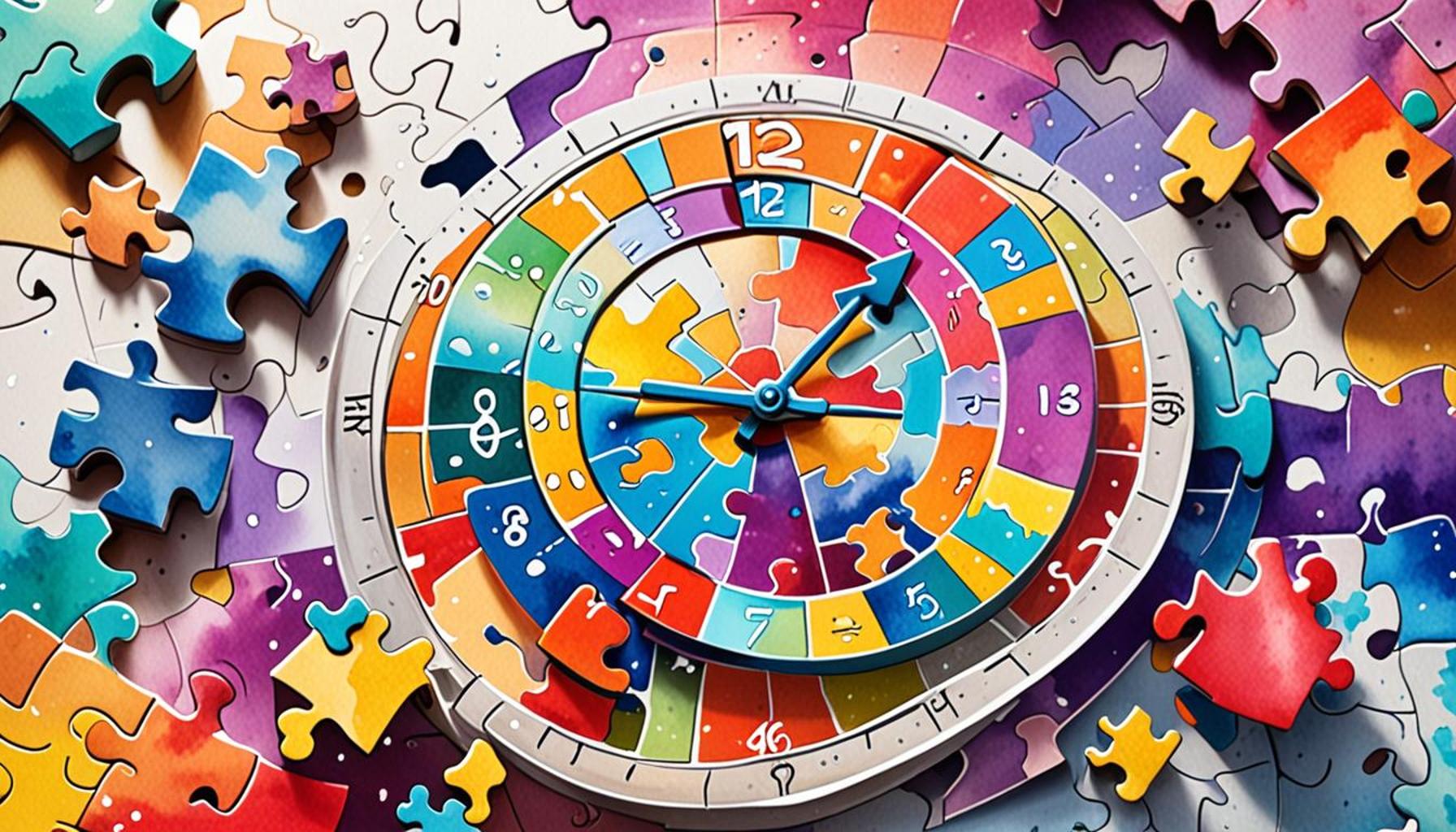
The Thrill of Puzzles
Puzzles engage the mind in a way that few other activities can, demanding not just intelligence, but also agility and patience. The pressing nature of competitions or personal challenges can turn a fun pastime into a high-stakes environment. In these moments of heightened pressure, even the most experienced puzzle aficionados can find themselves feeling strained. To navigate these challenges successfully, it becomes essential to master time strategies that facilitate stress management and promote improved performance.
Mastering Time Management Techniques
Understanding effective time management techniques can significantly alter your approach to puzzles. For example, breaking a complex puzzle into smaller, manageable parts can help prevent feelings of being overwhelmed. If you’re tackling a 1,000-piece jigsaw puzzle, consider focusing on one section of the image at a time. Such a segmented approach not only simplifies the task but also adds a sense of accomplishment as you complete each mini-goal.
Setting time limits for each section can also enhance productivity. By creating personal deadlines, you instill a sense of urgency that can drive you to work more efficiently. For instance, if you give yourself 30 minutes to complete a segment, you are likely to concentrate more intensely, knowing that time is of the essence.
Enhancing Focus through Mindfulness
Another valuable strategy is practicing mindfulness. This involves staying focused and fully engaged with the task at hand, thus reducing anxiety. Techniques such as deep-breathing exercises or brief meditative moments during longer puzzle sessions can help keep your mind clear and present, maintaining your cognitive abilities and preventing stress from clouding your judgment.
Tricks of the Trade
In addition to these strategies, several tried-and-true tactics can yield tangible benefits. Utilizing timers to mimic competitive environments can be particularly effective. This practice not only prepares you for real-life pressure situations but also allows you to track your performance and improve over time. For instance, if you consistently find that you can solve a specific type of puzzle in under an hour, you can use that benchmark to challenge yourself further.
Keeping track of your progress is beneficial too. By analyzing which techniques work best for you, you can refine your approach over time. Perhaps you discover that working in a quiet room enhances your focus more than working in a bustling cafe. Recognizing these patterns allows for tailored strategies that fit your unique puzzle-solving style.
The Value of Collaboration
Participating in group puzzles also offers significant advantages. Collaborating with peers not only exposes you to different techniques but also creates a supportive environment where you can share strategies and learn from one another. Consider local group meetups for puzzle enthusiasts or online forums where members discuss their successes and challenges. Such environments foster both community and personal growth.
Ultimately, by embracing these time strategies, puzzle solvers can elevate their skills and transform potentially paralyzing pressure into a motivating force. In the subsequent sections, we will explore practical and enjoyable methods for mastering time management in the realm of puzzles, ensuring that solvers not only improve their techniques but also continue to find joy in the intricate world of puzzling.
DISCOVER MORE: Click here to enhance your brainpower
Time Strategies in Puzzles: Breaking Down the Challenge
In the world of puzzle-solving, the ticking clock can often feel like an adversary rather than a mere measurement of time. However, employing specific time strategies can transform this pressure into a productive force. By dissecting the puzzle-solving process and implementing methods that enhance focus and efficiency, you can significantly boost your performance and enjoyment of the activity.
Segmenting Your Approach
One of the most effective time strategies is to break complex puzzles into smaller, more manageable sections. This technique reduces the overwhelming nature of larger challenges and fosters a clearer path to completion. For example, if you are working on a complex crossword puzzle, consider focusing on specific themes or clues first before tackling the entire grid.
- Segment the puzzle: Divide it into quarters or manageable sections.
- Identify easy wins: Start with the most obvious clues or pieces.
- Set incremental goals: Complete one section before moving to the next.
This method not only streamlines your process but also provides a psychological boost each time you successfully finish a segment. Completing these smaller tasks allows you to maintain a sense of progress, which can be motivating under pressure.
The Power of Timed Challenges
Incorporating a timer into your puzzle-solving sessions can simulate high-pressure environments and improve your adaptability. By setting specific time limits for each section, you can mimic the constraints experienced during competitions or timed events. The urgency created by a ticking clock often enhances focus. For instance, challenge yourself to finish a section of a jigsaw puzzle in ten minutes. This urgency drives you to make quicker decisions and strengthens your ability to handle real-time pressure.
Moreover, timed challenges can help you discover your average solving pace. By adjusting your time limits based on your historical performance, you can set more realistic and challenging goals, allowing for continual improvement.
Mindfulness: Finding Calm Amidst Chaos
Practicing mindfulness can significantly enhance your performance under pressure. When anxiety or stress threatens to derail your concentration, simple techniques can bring you back to the present moment. Consider incorporating brief moments of mindfulness into your routine, such as:
- Deep breathing: Take a few seconds to inhale deeply and exhale slowly, releasing tension.
- Visualizations: Close your eyes and visualize completing the puzzle successfully.
- Brief meditative pauses: Step away for a moment to reflect and reset before diving back in.
By fostering a calm and focused mind, you can combat the stress of approaching deadlines and pressure, ultimately improving your overall performance in solving the puzzle.
The Path to Skill Enhancement
The integration of these time strategies not only facilitates enhanced puzzle-solving skills but also transforms your experience from one of dread and pressure to one of mastery and enjoyment. Stay tuned as we delve deeper into advanced techniques and how you can implement them effectively in future sections, further elevating your puzzle-solving prowess.
Mastering Time Management in Puzzles
Effective time management is crucial in the realm of puzzles, especially when faced with tight deadlines. One of the most effective strategies involves breaking down the puzzle into smaller, manageable sections. By allocating specific time blocks for each section, puzzle enthusiasts can maintain focus and reduce stress. For instance, during complex Sudoku challenges, setting a timer for each row can help maintain pace and enhance overall performance.
The Power of Prioritization
Another impactful technique is prioritization. Understanding which sections of a puzzle are more challenging allows solvers to allocate their energy efficiently. For example, focusing on easier sections first can provide a confidence boost and make more difficult sections less intimidating. This way, individuals learn to build momentum, thereby improving their efficiency and response to pressure.
Implementing Relaxation Techniques
In high-stakes puzzle situations, managing physiological responses to stress can further enhance performance. Techniques such as deep breathing or visualization can significantly alleviate anxiety levels. Picture the final solution or envision a calm environment; such mental strategies have proven effective in helping individuals focus better under pressure.
Adapting to Time Constraints
Learning to adapt to various time constraints is essential. Engaging in timed practice sessions prepares individuals for real competition settings. The more one practices under time pressure, the more adept they become at devising strategies on the fly, effectively increasing confidence and proficiency.
Reflection and Adjustment
After completing a puzzle, reflection on the time management strategies employed can provide valuable insights for future efforts. Evaluating what worked well and what didn’t allows individuals to fine-tune their approach, honing their skills over time. Continuous self-assessment is a powerful tool for long-term improvement in puzzle-solving performance.
Leveraging Technology
Utilizing apps and software designed for puzzle practice can also aid in enhancing time management skills. Many of these tools feature timers and offer analytical feedback, allowing solvers to understand their strengths and weaknesses in real-time. By integrating technology into practice routines, individuals gain insights into their performance metrics, directly impacting their strategy adaptations.
| Advantages | Detailed Insights |
|---|---|
| Improved Focus | Time strategies enhance concentration, allowing for deeper engagement with puzzles. |
| Reduced Stress | Structured time management lowers anxiety levels, leading to heightened performance in high-pressure moments. |
Implementing these strategies can significantly transform a puzzle solver’s approach to time management and pressure. By fusing innovative techniques with consistent practice, anyone can enhance their puzzle-solving skills and overall mental agility, making the experience both enjoyable and rewarding.
DISCOVER MORE: Click here to learn about the impact of strategy games</p
Optimizing Time Management Techniques for Puzzle Success
As you delve deeper into the intricate world of puzzles, you will find that effective time strategies extend beyond mere segmentation and mindfulness. Developing a keen sense of time management will allow you to harness pressure and improve your performance dramatically. By incorporating effective workflows, prioritizing distractions, and using analytical tools, you can sharpen your puzzle-solving skills to new heights.
Creating a Structured Workflow
To navigate the challenges posed by complex puzzles, it’s beneficial to create a structured workflow. Establishing a systematic approach can streamline your efforts, making the solving process more efficient. Here’s how to achieve this:
- Establish a routine: Develop a consistent setup process for each puzzle type, including checklist items such as gathering necessary tools (like a pencil for crosswords or having all the pieces laid out for jigsaws).
- Work in intervals: Implement the Pomodoro Technique, where you focus intensely on solving for a specified period (e.g., 25 minutes) followed by a short break. This approach keeps your mind fresh and reduces fatigue.
- Document your progress: Keep a log of your solving times and strategies used for different puzzles. This information can help refine your approach and understand which methods yield the best results.
By adhering to a structured workflow, you can reduce decision fatigue, allowing you to focus solely on the puzzle at hand, enhancing your overall performance.
Recognizing and Mitigating Distractions
One of the most significant impediments to effective puzzle-solving under time constraints is distractions. Environments filled with interruptions can severely inhibit your ability to think clearly and efficiently. To minimize these distractions, consider the following:
- Designate your workspace: Create a dedicated puzzle-solving area free from distractions such as televisions or mobile devices that can lead to procrastination.
- Set boundaries: Communicate with those around you that you need focused time to concentrate. Use headphones or earplugs to drown out background noise.
- Limit multitasking: Focus on solving one puzzle at a time. Juggling multiple tasks can scatter your attention, making you prone to errors.
By acknowledging potential distractions and proactively eliminating them, you can cultivate a more conducive environment for puzzle-solving, enhancing your overall performance under pressure.
Utilizing Analytical Tools and Software
In the digital age, puzzle enthusiasts can leverage technology to enhance their skills further. There are various applications and software tools specifically designed to analyze puzzle performance and help implement time strategies. These tools can deliver insights into your solving patterns, identifying areas for improvement. Consider utilizing:
- Puzzle simulators: These tools recreate real-life puzzles in a timer-controlled format, allowing you to practice under realistic conditions.
- Performance tracking apps: Use apps that record your times and strategies, enabling you to analyze trends and adjust your techniques based on data.
- Online communities: Join forums or puzzle groups where members share strategies, tips, and resources for improving performance.
By integrating these advanced tools into your practice, you can not only improve your enjoyment of the process but also enhance your ability to perform under the pressure of time constraints.
DISCOVER MORE: Click here to learn about the impact of puzzles on problem-solving skills
Conclusion
In the high-stakes environment of puzzle-solving, mastering time strategies can substantially elevate your performance and enhance your overall experience. Through a structured approach that emphasizes routine and systematic workflows, you can effectively streamline your efforts, manage distractions, and optimize your environment for success. As discussed, implementing techniques such as the Pomodoro Technique not only preserves mental acuity but also transforms your puzzle experience into an enjoyable and productive endeavor.
Moreover, leveraging modern analytical tools and software can provide valuable insights into your solving patterns, helping you identify strengths and areas for improvement. Engaging with online communities can further enrich your skills, as the exchange of strategies among fellow puzzle enthusiasts can introduce you to new methodologies and techniques.
Ultimately, by cultivating a mindful and equipped approach to puzzle-solving, you can embrace pressure as a catalyst for growth rather than a source of stress. Whether you’re a novice enjoying the thrills of jigsaw puzzles or a seasoned crossword aficionado facing tight deadlines, the time strategies outlined here serve as an essential toolkit for navigating the intricacies of this rewarding pastime. Unlocking your full potential in puzzles means not only honing your skills but also transforming the way you perceive and respond to time constraints. With practice and determination, you’ll discover the joy of solving puzzles with both clarity and confidence.